Reptiles
Reptiles are a group of vertebrates that are characterized by their scaly skin, amniotic eggs, and cold-blooded nature. They are a diverse group of animals that includes snakes, lizards, turtles, crocodiles, and tuataras.
Characteristics of Reptiles
- Scaly Skin: Reptiles have dry, scaly skin that helps prevent water loss.
- Amniotic Eggs: Reptiles lay eggs with a shell that allows them to be laid on land, unlike amphibian eggs.
- Cold-Blooded: Reptiles are ectothermic, meaning they rely on external sources of heat to regulate their body temperature.
- Lung Breathers: They breathe air using lungs, unlike amphibians which can also respire through their skin.
Reptile Diversity
There are four main groups of reptiles:
- Squamata: This group includes lizards and snakes, which are known for their elongated bodies and flexible jaws.
- Crocodilia: This group includes crocodiles, alligators, caimans, and gharials, which are large, predatory reptiles with powerful jaws.
- Testudines: This group includes turtles and tortoises, which are characterized by their protective shells.
- Rhynchocephalia: This small group includes the tuatara, a lizard-like reptile found only in New Zealand.
Ecological Importance
Reptiles play important ecological roles as both predators and prey in various ecosystems. They help control insect and small mammal populations and are also important food sources for larger predators.
Conservation Status
Many reptile species are facing threats due to habitat loss, climate change, and illegal wildlife trade. Conservation efforts are important to protect these animals and their habitats.
Study Tips
- Use diagrams and labeled illustrations to understand the anatomy of different reptile groups.
- Compare and contrast the characteristics of reptiles with other vertebrate groups such as amphibians and mammals.
- Visit a local zoo or reptile exhibit to observe different species firsthand.
- Research current conservation efforts and the importance of protecting reptile species.
- Practice identifying different reptile species based on their physical features.
◂Biology Worksheets and Study Guides High School. Microorganisms I
Worksheet/Answer key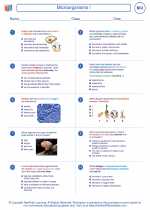 Microorganisms I
  Worksheet/Answer key
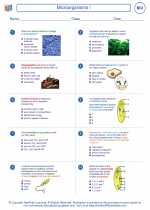 Microorganisms I Worksheet/Answer key
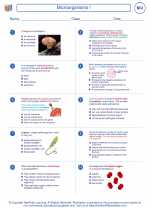 Microorganisms I Worksheet/Answer key
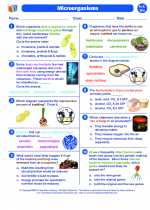 Microorganisms I Vocabulary/Answer key
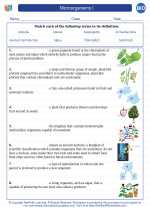 Microorganisms I Vocabulary/Answer key
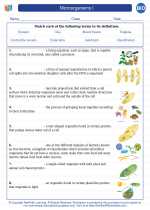 Microorganisms I Vocabulary/Answer key
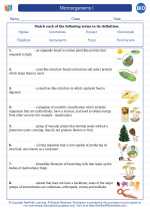 Microorganisms I Vocabulary/Answer key
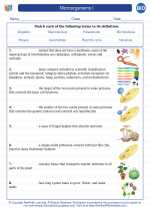 Microorganisms I Vocabulary/Answer key
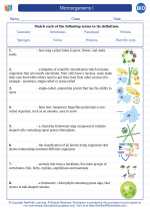 Microorganisms I
Worksheet/Answer keyWorksheet/Answer keyWorksheet/Answer keyVocabulary/Answer keyVocabulary/Answer keyVocabulary/Answer keyVocabulary/Answer keyVocabulary/Answer keyThe resources above cover the following skills:
BIOLOGY
Unity and Diversity
Obtain, evaluate, and communicate information to explain how organisms are classified by physical characteristics, organized into levels of taxonomy, and identified by binomial nomenclature (e.g., taxonomic classification, dichotomous keys).
Engage in argument to justify the grouping of viruses in a category separate from living things.