Thermometer
A thermometer is a device used to measure temperature. It consists of a long, narrow, glass tube with a bulb at one end that contains a liquid, typically mercury or colored alcohol. As the temperature changes, the liquid expands or contracts, rising or falling within the tube, indicating the temperature on a scale.
There are different types of thermometers, including:
- Mercury thermometers: Contain mercury and have been widely used, but are being phased out due to the toxic nature of mercury.
- Digital thermometers: Use electronic heat sensors to measure temperature and display the results digitally.
- Infrared thermometers: Measure temperature from a distance using a laser to target the object being measured.
- Thermocouple thermometers: Use two different metals to produce a voltage that corresponds to the temperature.
Study Guide: Thermometer
Here are some key points to remember about thermometers:
- Explain the principle behind the functioning of a thermometer.
- List the different types of thermometers and their uses.
- Discuss the advantages and disadvantages of using different types of thermometers.
- Explain the concept of temperature scales such as Celsius, Fahrenheit, and Kelvin.
- Discuss the importance of using thermometers in various fields such as medicine, weather forecasting, and industrial applications.
Remember to familiarize yourself with the different types of thermometers and their applications to gain a comprehensive understanding of the topic.
Good luck with your studies!
.◂Biology Worksheets and Study Guides High School. Mitosis
Worksheet/Answer key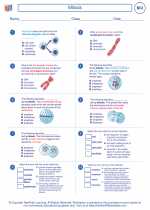 Mitosis
  Worksheet/Answer key
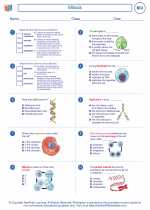 Mitosis Vocabulary/Answer key
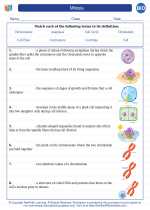 Mitosis Vocabulary/Answer key
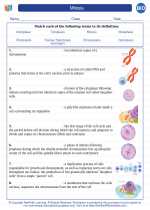 Mitosis Vocabulary/Answer key
 Mitosis
Worksheet/Answer keyVocabulary/Answer keyVocabulary/Answer keyVocabulary/Answer keyThe resources above cover the following skills:
Skills And Processes: The student will demonstrate ways of thinking and acting inherent in the practice of science. The student will use the language and instruments of science to collect, organize, interpret, calculate, and communicate information.
The student will use appropriate methods for communicating in writing and orally the processes and results of scientific investigation.
The student will describe similarities and differences when explaining concepts and/or principles.