Genetic Variation
Genetic variation refers to the differences in the genetic material (DNA) of individuals within a population or species. This variation arises through a variety of mechanisms, including mutations, genetic recombination, and gene flow.
Causes of Genetic Variation
- Mutations: Mutations are the ultimate source of genetic variation. They can occur spontaneously or be induced by mutagens, and lead to changes in the DNA sequence.
- Genetic Recombination: During meiosis, homologous chromosomes exchange genetic material through crossing over, leading to the creation of new combinations of alleles.
- Gene Flow: The movement of genes between populations through migration can introduce new genetic variations into a population.
Importance of Genetic Variation
Genetic variation is crucial for the evolutionary process and the survival of a species. It allows for adaptation to changing environments, provides the raw material for natural selection, and contributes to the overall biodiversity of ecosystems.
Methods of Studying Genetic Variation
- Population Genetics: This field of study focuses on the distribution and change of genetic variation within populations and how it is influenced by factors such as natural selection, genetic drift, and gene flow.
- Molecular Techniques: Methods such as PCR (Polymerase Chain Reaction) and DNA sequencing can be used to analyze specific genes or regions of the genome to identify genetic variations.
- Comparative Genomics: By comparing the genomes of different species or individuals, scientists can identify and study genetic variations that have arisen over evolutionary time.
Study Guide for Genetic Variation
To effectively study genetic variation, consider focusing on the following key areas:
- Understand the mechanisms that give rise to genetic variation, including mutations, recombination, and gene flow.
- Explore the impact of genetic variation on evolutionary processes and the survival of species.
- Learn about methods used to study genetic variation, such as population genetics and molecular techniques.
- Practice analyzing and interpreting data related to genetic variation, including allele frequencies and genetic diversity measures.
- Explore real-world examples of genetic variation in different organisms and how it influences their traits and adaptations.
By mastering these concepts and skills, you will develop a comprehensive understanding of genetic variation and its significance in the field of biology.
.◂Chemistry Worksheets and Study Guides High School. Elements - Set I
Worksheet/Answer key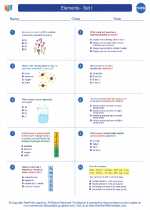 Elements - Set I
  Worksheet/Answer key
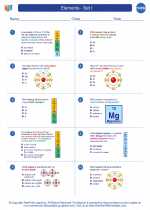 Elements - Set I Worksheet/Answer key
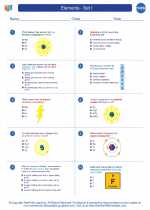 Elements - Set I
Worksheet/Answer keyWorksheet/Answer keyThe resources above cover the following skills:
PHYSICAL SCIENCE (NGSS)
Matter and Its Interactions
Students who demonstrate understanding can:
Use the periodic table as a model to predict the relative properties of elements based on the patterns of electrons in the outermost energy level of atoms.
Plan and conduct an investigation to gather evidence to compare the structure of substances at the bulk scale to infer the strength of electrical forces between particles.