Discussion in Chemistry
Discussion in chemistry involves the exchange of ideas, observations, and interpretations of experimental results among students and with the teacher. It is a key component of the learning process and helps students deepen their understanding of chemical concepts and principles.
Study Guide
- Active Participation: Actively engage in classroom discussions by asking questions, offering insights, and sharing observations from experiments.
- Critical Thinking: Analyze and evaluate the ideas presented during discussions to develop a deeper understanding of chemical concepts.
- Problem Solving: Use discussions as a platform to collaboratively solve chemical problems and apply theoretical knowledge to practical scenarios.
- Concept Clarification: Seek clarification on challenging topics and concepts during discussions to ensure a strong grasp of the material.
- Peer Learning: Learn from and contribute to the learning of peers through respectful and constructive discussions.
By actively participating in discussions and embracing the opportunity to learn from peers, students can enhance their understanding of chemistry and develop critical thinking skills essential for success in the field of science.
.◂Chemistry Worksheets and Study Guides High School. Lab Investigations/Scientific Method
Worksheet/Answer key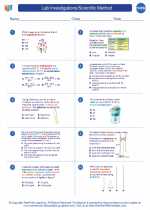 Lab Investigations/Scientific Method
  Worksheet/Answer key
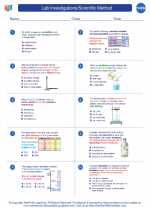 Lab Investigations/Scientific Method Worksheet/Answer key
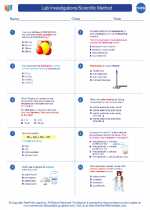 Lab Investigations/Scientific Method
Worksheet/Answer keyWorksheet/Answer keyThe resources above cover the following skills:
Earth and Space Science (ES)
Earth Processes
Explain how Earth's fluid outer core creates the magnetosphere and how this helps protect both humans and technology (such as satellites) from solar winds.