Environmental Engineering
Environmental engineering is a branch of engineering that focuses on protecting the environment and public health. It involves the application of scientific and engineering principles to improve and maintain the environment's natural resources. Environmental engineers work on a wide range of issues such as water and air pollution control, waste management, recycling, and environmental sustainability.
Key Concepts in Environmental Engineering
- Water Quality: Understanding the principles of water purification, treatment, and distribution systems to ensure access to clean and safe drinking water.
- Air Pollution Control: Studying methods to minimize air pollution from industrial processes, transportation, and other sources through the use of filters, scrubbers, and catalytic converters.
- Waste Management: Developing strategies for the proper disposal and recycling of solid and hazardous waste to minimize environmental impact.
- Environmental Impact Assessment: Evaluating the potential environmental effects of proposed projects and developments to ensure sustainable practices.
- Renewable Energy: Exploring and implementing sustainable energy sources such as solar, wind, and hydroelectric power to reduce reliance on fossil fuels.
Study Guide for Environmental Engineering
To excel in environmental engineering, students should focus on the following areas:
- Chemistry Fundamentals: Understand the chemical properties of pollutants and their interactions with the environment. Focus on topics such as acid-base reactions, redox reactions, and chemical equilibrium.
- Biology and Ecology: Gain knowledge of ecosystems, biodiversity, and the impact of human activities on the environment. Study topics such as food chains, ecological succession, and environmental conservation.
- Fluid Mechanics: Learn the principles of fluid behavior and its application to environmental systems, including the flow of water, air, and contaminants in natural and engineered environments.
- Environmental Law and Policy: Understand the regulatory frameworks and policies governing environmental protection at local, national, and international levels.
- Engineering Design and Analysis: Develop skills in designing and evaluating systems for water treatment, air pollution control, and waste management using engineering principles and computer-aided tools.
By mastering these fundamental areas, students can develop a strong foundation in environmental engineering and contribute to the sustainable management of natural resources and protection of the environment.
.◂Chemistry Worksheets and Study Guides High School. Lab Investigations/Scientific Method
Worksheet/Answer key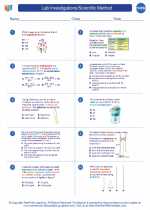 Lab Investigations/Scientific Method
  Worksheet/Answer key
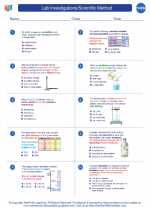 Lab Investigations/Scientific Method Worksheet/Answer key
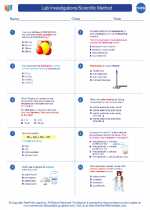 Lab Investigations/Scientific Method
Worksheet/Answer keyWorksheet/Answer keyThe resources above cover the following skills:
Earth and Space Science (ES)
Earth Processes
Explain how Earth's fluid outer core creates the magnetosphere and how this helps protect both humans and technology (such as satellites) from solar winds.