Tertiary Consumers in Ecology
Tertiary consumers are organisms that occupy the fourth trophic level in the food chain. They are carnivores that feed on secondary consumers, which in turn feed on primary consumers (herbivores). Tertiary consumers play a crucial role in regulating the population of lower trophic levels and maintaining the balance of ecosystems.
Characteristics of Tertiary Consumers
- Carnivorous Nature: Tertiary consumers primarily feed on other consumers, such as smaller carnivores or herbivores.
- Top Predators: They are often the top predators in their respective food chains, with few or no natural predators of their own.
- Energy Transfer: Tertiary consumers obtain energy and nutrients by consuming organisms from lower trophic levels.
- Population Regulation: Their predation helps regulate the population of both primary and secondary consumers, contributing to the overall stability of ecosystems.
Examples of Tertiary Consumers
Some common examples of tertiary consumers include:
- Large Carnivorous Mammals: Animals like lions, tigers, and wolves that prey on herbivores and smaller carnivores.
- Top Predatory Fish: Species like sharks and large predatory fish that feed on smaller fish and marine organisms.
- Raptors and Birds of Prey: Birds such as eagles and owls that hunt and consume smaller mammals and birds.
- Apex Predators: Animals like polar bears and crocodiles that sit at the top of their respective food chains.
Study Guide for Tertiary Consumers
To understand tertiary consumers in ecology, consider the following study guide:
- Food Chains and Trophic Levels: Learn about the flow of energy in ecosystems and how organisms are categorized into different trophic levels.
- Ecological Pyramids: Explore the concept of energy pyramids and how tertiary consumers fit into the overall structure of ecological communities.
- Population Dynamics: Study the interactions between different trophic levels and how the populations of organisms are influenced by predation and competition.
- Ecological Impact: Investigate the ecological importance of tertiary consumers and the consequences of their absence or overabundance in ecosystems.
Understanding the role of tertiary consumers is essential for comprehending ecological relationships and the interconnectedness of species within natural habitats.
.◂Chemistry Worksheets and Study Guides High School. Lab Investigations/Scientific Method
Worksheet/Answer key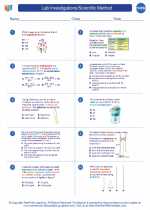 Lab Investigations/Scientific Method
  Worksheet/Answer key
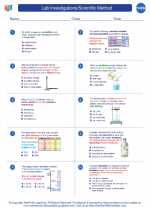 Lab Investigations/Scientific Method Worksheet/Answer key
 Lab Investigations/Scientific Method
Worksheet/Answer keyWorksheet/Answer keyThe resources above cover the following skills:
Earth and Space Science (ES)
Earth Processes
Explain how Earth's fluid outer core creates the magnetosphere and how this helps protect both humans and technology (such as satellites) from solar winds.