Babylon
Babylon was an ancient city located in Mesopotamia, near present-day Baghdad in Iraq. It was one of the most important cultural and political centers in ancient Mesopotamia, and its history dates back to the 3rd millennium BCE.
Key Facts about Babylon:
- Founded: Babylon was founded around 2300 BCE by the Amorite king, Sumu-abum.
- Hammurabi: The most famous king of Babylon was Hammurabi, who ruled from 1792 to 1750 BCE. He is best known for his law code, the Code of Hammurabi, which is one of the earliest known sets of laws in human history.
- Hanging Gardens: Babylon is also known for the Hanging Gardens, one of the Seven Wonders of the Ancient World. According to historical accounts, the gardens were built by King Nebuchadnezzar II for his wife, who longed for the lush gardens of her homeland.
- Decline: Babylon's power declined after the death of Nebuchadnezzar II in 562 BCE, and it was eventually conquered by the Persians in 539 BCE.
Study Guide:
To gain a deeper understanding of Babylon, consider exploring the following topics:
- Geography: Study the geographical location of Babylon and its significance in the ancient world. Understand the impact of the Euphrates River on the city's development.
- History: Research the key historical events and rulers of Babylon, including the reign of Hammurabi and the conquest by the Persians.
- The Hanging Gardens: Explore the construction and historical accounts of the Hanging Gardens of Babylon, and their significance in ancient architecture and engineering.
- Code of Hammurabi: Examine the laws and regulations outlined in the Code of Hammurabi, and the influence of this legal code on later societies.
- Legacy: Investigate the cultural, artistic, and architectural legacy of Babylon, including its impact on subsequent civilizations.
By delving into these areas of study, you can develop a comprehensive understanding of Babylon and its enduring legacy in ancient history.
.◂Earth Science Worksheets and Study Guides High School. Weather I
Worksheet/Answer key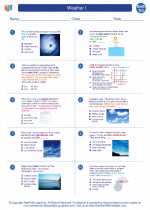 Weather I
  Worksheet/Answer key
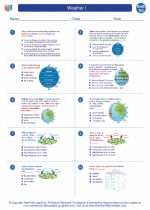 Weather I Worksheet/Answer key
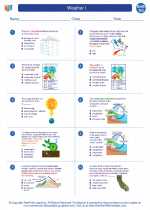 Weather I Worksheet/Answer key
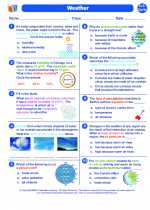 Weather I Vocabulary/Answer key
 Weather I Vocabulary/Answer key
 Weather I Vocabulary/Answer key
 Weather I
Worksheet/Answer keyWorksheet/Answer keyWorksheet/Answer keyVocabulary/Answer keyVocabulary/Answer keyVocabulary/Answer keyThe resources above cover the following skills:
ENVIRONMENTAL SCIENCE
Earth and Human Activity
Develop and use models to trace the flow of water, nitrogen, and phosphorus through the hydrosphere, atmosphere, geosphere, and biosphere.