Evolution
Evolution is the biological process through which species change over time, leading to the diversity of life on Earth. It is the central organizing principle of biology and helps explain the unity and diversity of life. The theory of evolution explains how all living organisms, including humans, are related and how they have evolved over time through mechanisms such as natural selection, genetic drift, and mutation.
Key Concepts in Evolution
- Natural Selection: This is the process by which organisms with traits that are better suited to their environment tend to survive and reproduce more than those with less favorable traits. Over time, this leads to the adaptation of populations to their environments.
- Genetic Drift: This is the random fluctuation of allele frequencies in a population, leading to changes in the gene pool. It is a significant driver of evolutionary change, particularly in small populations.
- Mutation: Mutations are changes in the DNA sequence of an organism, which can create new genetic variation. Mutations are the raw material for evolution, as they can lead to the development of new traits.
- Speciation: This is the process by which new species arise. It occurs when populations of the same species become reproductively isolated from each other, leading to the accumulation of genetic differences over time.
Evidence for Evolution
Several lines of evidence support the theory of evolution:
- Fossil Record: Fossils provide a record of the history of life on Earth, showing the transitions between different species over time.
- Comparative Anatomy: Similarities in the structures of different organisms provide evidence of common ancestry and evolutionary relationships.
- Biogeography: The distribution of species around the world reflects the history of continental drift and the migration of species over time.
- Genetics: Genetic similarities and differences among organisms provide evidence for common ancestry and evolutionary change.
- Observational Evidence: Examples of natural selection and adaptation can be observed in real time, such as the development of antibiotic resistance in bacteria.
Study Guide for Evolution
When studying evolution, it is important to focus on the following key points:
- Understand the mechanisms of evolution, including natural selection, genetic drift, and mutation.
- Examine the evidence for evolution, including the fossil record, comparative anatomy, biogeography, and genetic evidence.
- Explore the concept of speciation and how new species arise.
- Consider the role of evolution in shaping the diversity of life on Earth and its implications for fields such as medicine, agriculture, and conservation.
By understanding these key concepts and evidence, you can gain a comprehensive understanding of the theory of evolution and its significance in the study of biology.
.◂Earth Science Worksheets and Study Guides High School. Weather I
Worksheet/Answer key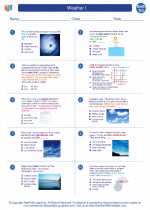 Weather I
  Worksheet/Answer key
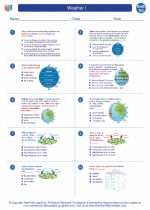 Weather I Worksheet/Answer key
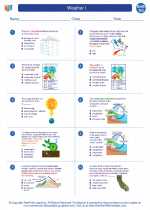 Weather I Worksheet/Answer key
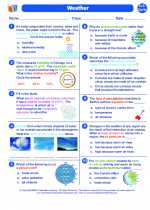 Weather I Vocabulary/Answer key
 Weather I Vocabulary/Answer key
 Weather I Vocabulary/Answer key
 Weather I
Worksheet/Answer keyWorksheet/Answer keyWorksheet/Answer keyVocabulary/Answer keyVocabulary/Answer keyVocabulary/Answer keyThe resources above cover the following skills:
ENVIRONMENTAL SCIENCE
Earth and Human Activity
Develop and use models to trace the flow of water, nitrogen, and phosphorus through the hydrosphere, atmosphere, geosphere, and biosphere.