Metallic Wires: An Introduction
Metals are excellent conductors of electricity and are often used in the form of wires to transmit electrical energy. Metallic wires are made from various metals and alloys and are essential components in electrical circuits and devices.
Properties of Metallic Wires
There are several key properties of metallic wires that make them ideal for conducting electricity:
- Conductivity: Metals have a high electrical conductivity, allowing electricity to flow through the wires with minimal resistance.
- Ductility: Metals can be drawn into thin wires without breaking, allowing for the production of long, flexible wires.
- Malleability: Metals can be easily shaped and bent into different configurations, making them adaptable for various applications.
- Corrosion resistance: Some metals and alloys used in wires are resistant to corrosion, ensuring the longevity of the wires.
Types of Metallic Wires
There are several types of metallic wires used in different applications:
- Copper Wires: Known for their high conductivity, copper wires are widely used in electrical wiring and transmission of electricity.
- Aluminum Wires: Aluminum wires are lightweight and often used in power distribution and transmission lines.
- Alloy Wires: Alloys such as nichrome (nickel-chromium) are used in heating elements due to their high resistance and ability to withstand high temperatures.
Uses of Metallic Wires
Metallic wires are used in various applications, including:
- Electrical wiring in buildings and homes
- Transmission and distribution of electricity
- Electronic circuits and devices
- Heating elements in appliances
Study Guide
To further understand metallic wires, here are some key points to study:
- Identify and research the properties of different metals used in the production of metallic wires.
- Explore the process of drawing and manufacturing metallic wires from raw materials.
- Investigate the applications of metallic wires in various industries and everyday technology.
- Conduct experiments to test the conductivity and resistance of different metallic wires.
◂Science Worksheets and Study Guides Second Grade. Did you know... 2nd Grade
Study Guide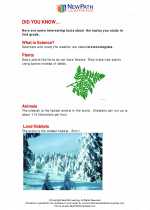 Did you know... 2nd Grade
  Worksheet/Answer key
 Did you know... 2nd Grade Worksheet/Answer key
 Did you know... 2nd Grade Worksheet/Answer key
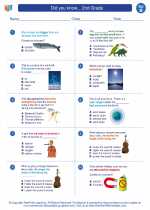 Did you know... 2nd Grade Vocabulary/Answer key
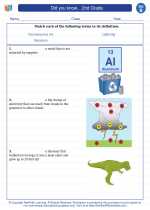 Did you know... 2nd Grade
Worksheet/Answer keyWorksheet/Answer keyWorksheet/Answer keyVocabulary/Answer keyThe resources above cover the following skills:
Earth Systems Science
Weather and the changing seasons impact the environment and organisms such as humans, plants, and other animals. Students can:
Analyze ways in which severe weather contributes to catastrophic events such as floods and forest fires