Oil
Oil is a type of liquid that is made up of hydrocarbons, which are molecules made of hydrogen and carbon atoms. It is found naturally beneath the Earth's surface and is extracted through the process of drilling. Oil is a valuable natural resource that is used for various purposes, including fuel for transportation, heating, and electricity generation.
Properties of Oil:
- Viscosity: Oil is thick and sticky, with a high viscosity that makes it flow slowly.
- Flammability: Oil is flammable and can be used as a fuel source.
- Insolubility: Oil does not mix with water and is insoluble in it.
- Color: Oil comes in various colors, ranging from clear to dark brown, depending on its composition.
Uses of Oil:
Oil has numerous uses in modern society, including:
- Transportation fuel for cars, airplanes, and ships
- Heating homes and buildings
- Production of electricity through oil-fired power plants
- Manufacturing of plastics, lubricants, and chemical products
Environmental Impact:
The use of oil can have significant environmental impacts, such as air and water pollution, as well as contributing to climate change through the release of greenhouse gases when burned as a fuel.
Study Guide:
Here are some key points to remember about oil:
- What are the main components of oil?
- What are the properties of oil?
- What are the primary uses of oil?
- What are the environmental impacts of using oil?
- How is oil extracted from the Earth?
◂Science Worksheets and Study Guides Third Grade. Did you Know... 3rd grade
Study Guide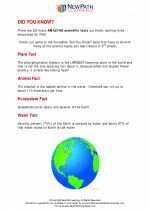 Did you Know... 3rd grade
  Worksheet/Answer key
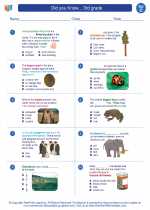 Did you Know... 3rd grade Worksheet/Answer key
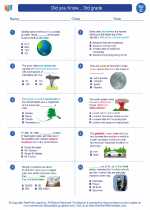 Did you Know... 3rd grade Worksheet/Answer key
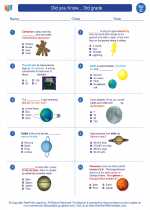 Did you Know... 3rd grade
Worksheet/Answer keyWorksheet/Answer keyWorksheet/Answer keyThe resources above cover the following skills:
LIFE SCIENCE
Unity and Diversity
Construct an argument from evidence to explain the likelihood of an organism’s ability to survive when compared to the resources in a certain habitat (e.g., freshwater organisms survive well, less well, or not at all in saltwater; desert organisms survive well, less well, or not at all in woodlands).
Create models that illustrate how organisms and their habitats make up a system in which the parts depend on each other.