Insects
Insects are a class of invertebrates within the arthropod phylum. They are the most diverse group of animals on the planet, with over a million described species. Insects play a crucial role in ecosystems as pollinators, decomposers, and as a food source for other animals. They have a characteristic body structure consisting of three segments: head, thorax, and abdomen, as well as three pairs of legs and often one or two pairs of wings.
Characteristics of Insects
- Body Structure: Insects have a three-part body (head, thorax, and abdomen), three pairs of legs, and often one or two pairs of wings.
- Mouthparts: Depending on the species, insects can have chewing mouthparts (e.g., grasshoppers), piercing-sucking mouthparts (e.g., mosquitoes), or siphoning mouthparts (e.g., butterflies).
- Metamorphosis: Many insects undergo metamorphosis, which is a process of development involving distinct stages such as egg, larva, pupa, and adult. There are two types of metamorphosis: complete (holometabolous) and incomplete (hemimetabolous).
- Habitats: Insects can be found in almost every habitat on Earth, including terrestrial, freshwater, and marine environments.
- Feeding Habits: Insects have diverse feeding habits, including herbivory, carnivory, omnivory, and scavenging.
Importance of Insects
Insects play a critical role in ecosystems and have significant impacts on human society. Some key reasons why insects are important include:
- Pollination: Many plants rely on insects for pollination, which is essential for the production of fruits, seeds, and new plants.
- Decomposition: Insects such as beetles and flies help break down organic matter, contributing to nutrient cycling and soil health.
- Food Source: Insects are a vital food source for many animals, including birds, reptiles, amphibians, and other insects.
- Pest Control: Some insects, like ladybugs and certain wasp species, are natural predators of agricultural pests, providing ecological pest control.
Study Guide
Here are some key concepts and questions to help you study insects:
- Anatomy: Describe the basic body structure of insects, including the functions of the head, thorax, abdomen, legs, and wings.
- Metamorphosis: Explain the difference between complete and incomplete metamorphosis, and provide examples of insects that undergo each type.
- Ecological Importance: Discuss the ecological roles of insects and how they contribute to ecosystem functioning.
- Species Diversity: Research and present information about the diversity of insect species, including their habitats, feeding habits, and adaptations.
- Human Interaction: Investigate the ways in which insects impact human society, both positively and negatively, and propose potential solutions to mitigate negative impacts.
[Insects] Related Worksheets and Study Guides:
.◂Science Worksheets and Study Guides Third Grade. Forces and motion-how things move
Lesson Plan Forces and Motion - Bundle
  Study Guide
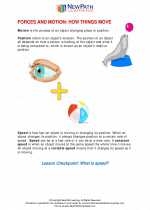 Forces and motion-how things move Worksheet/Answer key
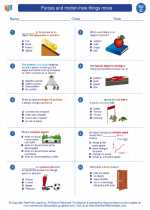 Forces and motion-how things move Worksheet/Answer key
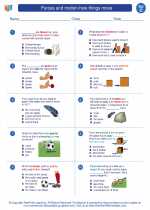 Forces and motion-how things move Worksheet/Answer key
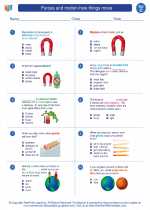 Forces and motion-how things move Vocabulary/Answer key
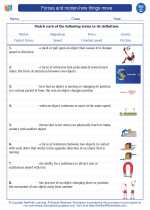 Forces and motion-how things move Vocabulary/Answer key
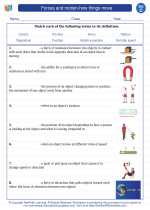 Forces and motion-how things move
Study GuideWorksheet/Answer keyWorksheet/Answer keyWorksheet/Answer keyVocabulary/Answer keyVocabulary/Answer keyThe resources above cover the following skills:
PHYSICAL SCIENCE (NGSS)
Motion and Stability: Forces and Interactions
Students who demonstrate understanding can:
Make observations and/or measurements of an object’s motion to provide evidence that a pattern can be used to predict future motion.