Discussion
A discussion is a conversation or debate about a particular topic or subject. It involves the exchange of ideas, opinions, and information between two or more people. Discussions are essential for learning, problem-solving, and decision-making.
Types of Discussions
- Informal Discussions: These are casual conversations that can take place anywhere and are not necessarily structured.
- Formal Discussions: These are more structured and organized conversations, often guided by specific rules or guidelines.
- Group Discussions: Conversations involving a larger group of people, where everyone has the opportunity to contribute and share their thoughts.
- Debate: A formal discussion where participants present and argue opposing viewpoints on a specific topic.
Benefits of Discussions
Discussions offer numerous benefits, including:
- Enhancing critical thinking skills
- Promoting active participation
- Encouraging collaboration and teamwork
- Providing opportunities for diverse perspectives
- Facilitating problem-solving and decision-making
Tips for Effective Discussions
To ensure productive and meaningful discussions, consider the following tips:
- Active Listening: Pay attention to what others are saying and show respect for their viewpoints.
- Respectful Communication: Use polite language and avoid interrupting others.
- Participation: Encourage everyone to contribute to the discussion and share their thoughts.
- Open-mindedness: Be willing to consider different perspectives and be open to new ideas.
- Focused Discussion Points: Keep the discussion focused on the topic at hand to avoid straying off course.
Study Guide Questions
- What is a discussion and why is it important?
- What are the different types of discussions?
- What are the benefits of engaging in discussions?
- How can you ensure an effective and productive discussion?
◂Science Worksheets and Study Guides Third Grade. Hands-on Lab Skills/Science Inquiry - 3rd grade
Lesson Plan Hands-On Lab Skills / Science Inquiry - Bundle
  Study Guide
 Hands-on Lab Skills/Science Inquiry - 3rd grade Worksheet/Answer key
 Hands-on Lab Skills/Science Inquiry - 3rd grade Worksheet/Answer key
 Hands-on Lab Skills/Science Inquiry - 3rd grade Worksheet/Answer key
 Hands-on Lab Skills/Science Inquiry - 3rd grade Worksheet/Answer key
 O-W-L Vocabulary/Answer key
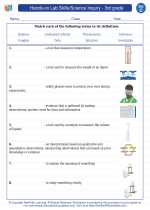 Hands-on Lab Skills/Science Inquiry - 3rd grade Vocabulary/Answer key
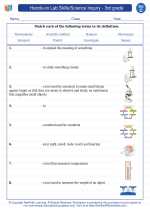 Hands-on Lab Skills/Science Inquiry - 3rd grade
Study GuideWorksheet/Answer keyWorksheet/Answer keyWorksheet/Answer keyWorksheet/Answer keyVocabulary/Answer keyVocabulary/Answer keyThe resources above cover the following skills:
Science as Inquiry and Process: A student should understand and be able to apply the processes and applications of scientific inquiry. A student who meets the content standard should:
Develop an understanding of the processes of science used to investigate problems, design and conduct repeatable scientific investigations, and defend scientific arguments.