Key Concepts in Life Science
- Cell Structure and Function: Cells are the basic units of life. They have specific structures and functions that allow living organisms to carry out essential processes such as respiration, reproduction, and growth.
- Genetics and Heredity: Genetics is the study of genes, heredity, and variation in living organisms. It explores how traits are passed from parents to offspring and how genetic information is expressed.
- Ecology: Ecology is the study of the interactions between living organisms and their environment. It includes the study of ecosystems, communities, populations, and the distribution of organisms.
- Evolution: Evolution is the process of change in living organisms over time. It explains how species adapt to their environment and how new species arise through natural selection and genetic variation.
- Anatomy and Physiology: Anatomy is the study of the structure of living organisms, while physiology is the study of their functions and processes. Together, they provide a comprehensive understanding of how organisms work.
- Classification of Living Organisms: Taxonomy is the science of identifying, naming, and classifying living organisms based on their characteristics and evolutionary relationships.
Study Tips for Life Science
- Use diagrams and visual aids to understand cell structures, biological processes, and ecological relationships.
- Practice using scientific classification systems to categorize different organisms.
- Explore real-life examples of genetics and heredity, such as inherited traits in humans or breeding patterns in animals.
- Observe and document local ecosystems to understand the interactions between living organisms and their environment.
- Read about famous scientists and their contributions to the field of life science, such as Charles Darwin and Gregor Mendel.
- Engage in hands-on experiments and activities to explore biological concepts, such as growing plants, observing microorganisms, or dissecting specimens.
[Life Science] Related Worksheets and Study Guides:
.◂Science Worksheets and Study Guides Third Grade. Natural Resources
Lesson Plan Natural Resources - Bundle
  Study Guide
 Natural resources Worksheet/Answer key
 Natural resources Worksheet/Answer key
 Natural resources Worksheet/Answer key
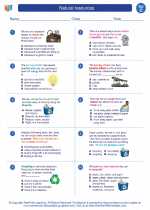 Natural resources Vocabulary/Answer key
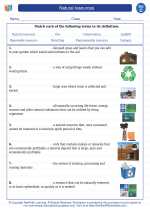 Natural resources
Study GuideWorksheet/Answer keyWorksheet/Answer keyWorksheet/Answer keyVocabulary/Answer keyThe resources above cover the following skills:
Core Ideas for Using Science
Applications of science often have both positive and negative ethical, social, economic, and/or political implications.