Nucleus
The nucleus is a membrane-bound organelle found in eukaryotic cells. It serves as the control center of the cell, housing the cell's genetic material and coordinating cellular activities.
Structure of the Nucleus
The nucleus is surrounded by a double membrane called the nuclear envelope, which contains nuclear pores that regulate the passage of molecules in and out of the nucleus. Inside the nucleus, there is a semi-fluid matrix called nucleoplasm, where the genetic material is located. The genetic material consists of DNA, which is organized into structures called chromosomes. The nucleus also contains a structure called the nucleolus, which is involved in the production of ribosomes.
Functions of the Nucleus
- Genetic Control: The nucleus houses the cell's DNA, which contains the instructions for making proteins and controlling cell functions.
- Ribosome Production: The nucleolus is responsible for producing ribosomal RNA (rRNA) and assembling ribosomal subunits, which are essential for protein synthesis.
- Cellular Activities: The nucleus regulates gene expression and coordinates cellular activities such as growth, metabolism, and reproduction.
Study Guide
When studying the nucleus, it's important to focus on the following key points:
- Describe the structure of the nucleus, including the nuclear envelope, nucleoplasm, chromosomes, and nucleolus.
- Explain the functions of the nucleus in controlling gene expression and coordinating cellular activities.
- Understand the role of the nucleus in ribosome production and protein synthesis.
- Explore the relationship between the nucleus and other cell organelles in maintaining cellular function.
◂Science Worksheets and Study Guides Third Grade. Weather
Lesson Plan Weather - Bundle
  Study Guide
 Weather Worksheet/Answer key
 Weather Worksheet/Answer key
 Weather Worksheet/Answer key
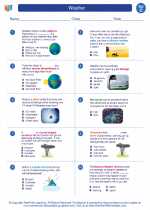 Weather Vocabulary/Answer key
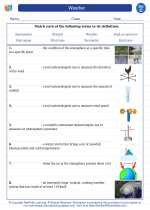 Weather Vocabulary/Answer key
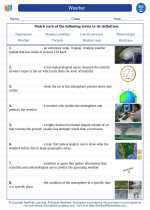 Weather
Study GuideWorksheet/Answer keyWorksheet/Answer keyWorksheet/Answer keyVocabulary/Answer keyVocabulary/Answer keyThe resources above cover the following skills:
EARTH AND SPACE SCIENCE (NGSS)
Earth’s Systems
Students who demonstrate understanding can:
Represent data in tables and graphical displays to describe typical weather conditions expected during a particular season.