Domains
A domain, in the context of science and biology, refers to the highest level of organization in the biological classification system. It represents a broad group of organisms that share certain fundamental characteristics.
Three Domains of Life
There are three main domains of life: Bacteria, Archaea, and Eukarya.
- Bacteria: This domain includes prokaryotic organisms that are single-celled and lack a nucleus. They are diverse and can be found in various environments, including soil, water, and the human body.
- Archaea: Similar to bacteria, archaea are also prokaryotic organisms. However, they differ in fundamental ways, such as their genetic makeup and cell membrane composition. They are found in extreme environments like hot springs, deep-sea vents, and salty environments.
- Eukarya: This domain includes eukaryotic organisms, which are characterized by having a true nucleus and membrane-bound organelles. Eukaryotes encompass a wide range of organisms, including plants, animals, fungi, and protists.
Characteristics of Domains
Each domain has distinct characteristics that differentiate them from one another. These can include differences in cell structure, genetic makeup, and metabolic processes.
Study Guide
Here are some key points to remember when studying domains:
- Understand the differences between prokaryotic and eukaryotic cells.
- Learn the defining characteristics of each domain (Bacteria, Archaea, and Eukarya).
- Explore examples of organisms within each domain and their habitats.
- Consider the evolutionary relationships between the three domains.
By mastering the concept of domains, you'll gain a deeper understanding of the diversity of life on Earth and the fundamental differences between various groups of organisms.
.◂Science Worksheets and Study Guides Fourth Grade. Animal Growth and Reproduction
Lesson Plan Animal Growth and Reproduction - Bundle
  Study Guide
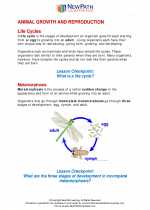 Animal Growth and Reproduction Activity Lesson
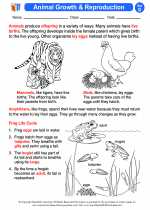 Animal Growth & Reproduction Worksheet/Answer key
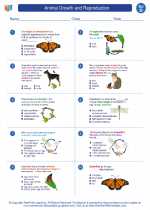 Animal Growth and Reproduction Worksheet/Answer key
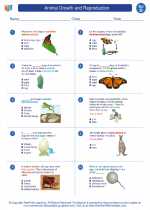 Animal Growth and Reproduction Worksheet/Answer key
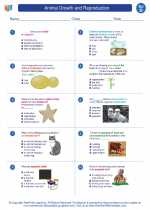 Animal Growth and Reproduction Worksheet/Answer key
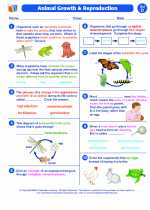 Animal Growth and Reproduction Vocabulary/Answer key
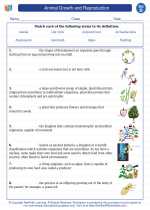 Animal Growth and Reproduction Vocabulary/Answer key
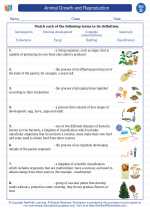 Animal Growth and Reproduction Vocabulary/Answer key
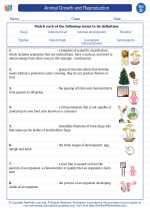 Animal Growth and Reproduction Vocabulary/Answer key
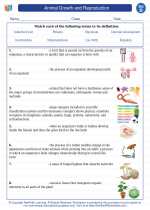 Animal Growth and Reproduction Vocabulary/Answer key
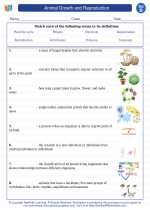 Animal Growth and Reproduction
Study GuideActivity LessonWorksheet/Answer keyWorksheet/Answer keyWorksheet/Answer keyWorksheet/Answer keyVocabulary/Answer keyVocabulary/Answer keyVocabulary/Answer keyVocabulary/Answer keyVocabulary/Answer keyThe resources above cover the following skills:
Life Science
Heredity and Reproduction - A. Offspring of plants and animals are similar to, but not exactly like, their parents or each other. B. Life cycles vary among organisms, but reproduction is a major stage in the life cycle of all organisms.
Compare and contrast the major stages in the life cycles of Florida plants and animals, such as those that undergo incomplete and complete metamorphosis, and flowering and nonflowering seed-bearing plants.