Amphibians
Amphibians are a group of vertebrate animals that are characterized by their ability to live both in water and on land. They typically have moist skin, lay eggs in water, and undergo a metamorphosis from a water-breathing larval stage to an air-breathing adult stage.
Characteristics of Amphibians:
- Moist Skin: Amphibians have thin, moist skin that allows them to breathe through their skin, in addition to their lungs.
- Metamorphosis: Most amphibians undergo a metamorphosis, starting as aquatic larvae with gills and later developing into adults with lungs.
- Egg-laying: Amphibians lay their eggs in water, and their offspring typically go through a larval stage in water before transitioning to land.
- Double Life: Amphibians spend the early part of their lives in water and the later part on land, making them "double-life" animals.
Common Types of Amphibians:
Some common types of amphibians include:
- Frogs
- Toads
- Newts
- Salamanders
Importance of Amphibians:
Amphibians play a crucial role in their ecosystems as both predators and prey. They also serve as indicators of environmental health, as their sensitive skin makes them vulnerable to changes in water and air quality.
Study Guide Questions:
- What are the key characteristics of amphibians?
- Describe the process of metamorphosis in amphibians.
- Why are amphibians considered indicators of environmental health?
- List and describe at least three common types of amphibians.
- Explain the importance of amphibians in their ecosystems.
[Amphibians] Related Worksheets and Study Guides:
.◂Science Worksheets and Study Guides Fourth Grade. Force, Motion, and Energy
Lesson Plan Force, Motion, and Energy - Bundle
  Study Guide
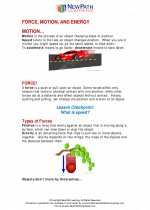 Force, motion and energy Activity Lesson
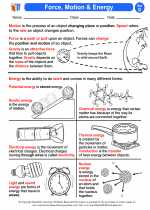 Force, Motion & Energy Worksheet/Answer key
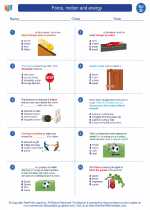 Force, motion and energy Worksheet/Answer key
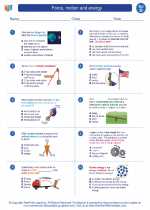 Force, motion and energy Worksheet/Answer key
 Force, motion and energy Worksheet/Answer key
 Forces, Motion end Energy Vocabulary/Answer key
 Force, motion and energy Vocabulary/Answer key
 Force, motion and energy Vocabulary/Answer key
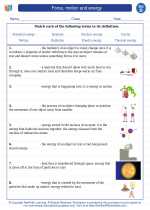 Force, motion and energy
Study GuideActivity LessonWorksheet/Answer keyWorksheet/Answer keyWorksheet/Answer keyWorksheet/Answer keyVocabulary/Answer keyVocabulary/Answer keyVocabulary/Answer keyThe resources above cover the following skills:
PHYSICAL SCIENCE (NGSS)
Energy
Students who demonstrate understanding can:
Use evidence to construct an explanation relating the speed of an object to the energy of that object.