Skeleton
The skeleton is the framework of bones that supports the body of a human or an animal. It serves several important functions, including providing structure, protecting internal organs, and enabling movement.
Functions of the Skeleton
- Support: The skeleton provides a rigid framework that supports the body and gives it shape.
- Protection: The bones of the skeleton protect vital organs such as the brain, heart, and lungs.
- Movement: Muscles are attached to the bones of the skeleton, allowing for movement and locomotion.
- Production of Blood Cells: The bone marrow within the bones is responsible for producing red and white blood cells.
- Storage of Minerals: The skeleton stores minerals such as calcium and phosphorus, which are vital for various bodily functions.
Types of Bones
There are two main types of bones in the human body:
- Compact Bone: Dense and hard, it forms the outer layer of bones and provides strength.
- Spongy Bone: Porous and lightweight, it is found inside bones and helps to reduce the overall weight of the skeleton.
Parts of the Skeleton
The human skeleton is divided into two main parts:
- Axial Skeleton: This includes the skull, vertebral column, and rib cage, and provides central support for the body.
- Appendicular Skeleton: This includes the bones of the limbs, shoulder girdle, and pelvic girdle, and is involved in movement and locomotion.
Study Guide
Here are some key points to remember when studying the skeleton:
- Identify the functions of the skeleton and give examples of how each function is important for the body.
- Describe the differences between compact and spongy bone and explain the roles of each type.
- List the major bones of the axial skeleton and the appendicular skeleton, and explain their functions.
- Explain the process of bone growth and the importance of maintaining strong and healthy bones.
[Skeleton] Related Worksheets and Study Guides:
.◂Science Worksheets and Study Guides Fourth Grade. Force, Motion, and Energy
Lesson Plan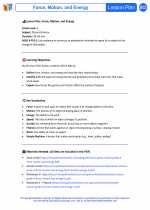 Force, Motion, and Energy - Bundle
  Study Guide
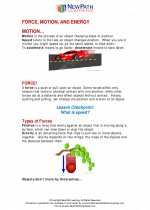 Force, motion and energy Activity Lesson
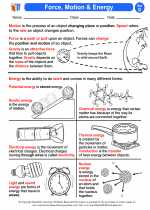 Force, Motion & Energy Worksheet/Answer key
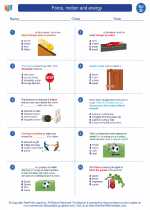 Force, motion and energy Worksheet/Answer key
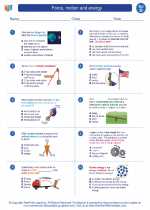 Force, motion and energy Worksheet/Answer key
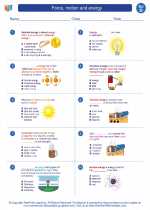 Force, motion and energy Worksheet/Answer key
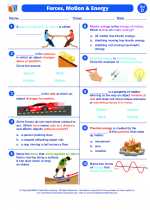 Forces, Motion end Energy Vocabulary/Answer key
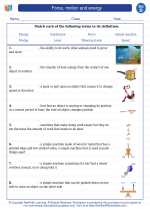 Force, motion and energy Vocabulary/Answer key
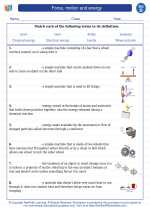 Force, motion and energy Vocabulary/Answer key
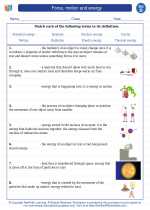 Force, motion and energy
Study GuideActivity LessonWorksheet/Answer keyWorksheet/Answer keyWorksheet/Answer keyWorksheet/Answer keyVocabulary/Answer keyVocabulary/Answer keyVocabulary/Answer keyThe resources above cover the following skills:
PHYSICAL SCIENCE (NGSS)
Energy
Students who demonstrate understanding can:
Use evidence to construct an explanation relating the speed of an object to the energy of that object.