What is a Month?
A month is a unit of time that is approximately based on the period of the moon's phases. Most modern calendars are based on the concept of the month, and it is used to divide the year into smaller, more manageable segments.
Types of Months
There are two main types of months:
- Solar Months: These are based on the position of the Earth in relation to the sun. The most commonly used solar calendar is the Gregorian calendar, which has 12 months in a year.
- Lunar Months: These are based on the phases of the moon. The lunar month is approximately 29.5 days long, and lunar calendars are used in some cultures for religious and agricultural purposes.
Days in a Month
The number of days in a month varies depending on the specific month and the calendar system being used. In the Gregorian calendar, the months have the following number of days:
- January - 31 days
- February - 28 days (29 in a leap year)
- March - 31 days
- April - 30 days
- May - 31 days
- June - 30 days
- July - 31 days
- August - 31 days
- September - 30 days
- October - 31 days
- November - 30 days
- December - 31 days
Study Guide for Months
Here are some key points to remember about months:
- What is the difference between a solar month and a lunar month?
- How many days are there in a leap year?
- Which month has the fewest number of days?
- What are the names of the months in the Gregorian calendar?
- Why are lunar months used in some cultures?
Understanding the concept of months is important for keeping track of time and for various cultural and religious practices.
.◂Science Worksheets and Study Guides Fourth Grade. Invertebrates - Animals without Backbones
Lesson Plan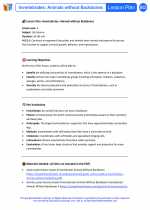 Invertebrates: Animals without Backbones - Bundle
  Study Guide
 Invertebrates - Animals without Backbones Activity Lesson
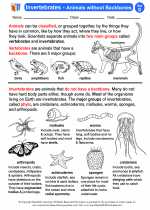 Invertebrates - Animals without Backbones Worksheet/Answer key
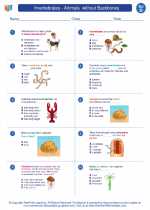 Invertebrates - Animals without Backbones Worksheet/Answer key
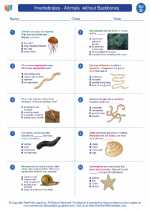 Invertebrates - Animals without Backbones Worksheet/Answer key
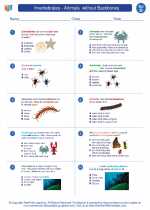 Invertebrates - Animals without Backbones Worksheet/Answer key
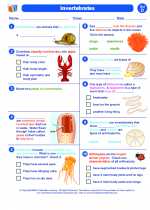 Invertebrates Vocabulary/Answer key
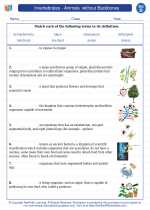 Invertebrates - Animals without Backbones Vocabulary/Answer key
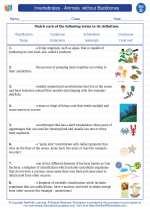 Invertebrates - Animals without Backbones Vocabulary/Answer key
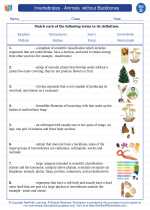 Invertebrates - Animals without Backbones Vocabulary/Answer key
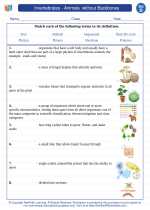 Invertebrates - Animals without Backbones Vocabulary/Answer key
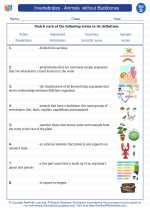 Invertebrates - Animals without Backbones
Study GuideActivity LessonWorksheet/Answer keyWorksheet/Answer keyWorksheet/Answer keyWorksheet/Answer keyVocabulary/Answer keyVocabulary/Answer keyVocabulary/Answer keyVocabulary/Answer keyVocabulary/Answer keyThe resources above cover the following skills:
Life Science: The students will use scientific skills and processes to explain the dynamic nature of living things, their interactions, and the results from the interactions that occur over time.
Diversity of Life: Explain how animals and plants can be grouped according to observable features.
Classify a variety of animals and plants according to their observable features and provide reasons for placing them into different groups.