Mental Health
Mental health refers to a person's emotional, psychological, and social well-being. It affects how we think, feel, and act. It also helps determine how we handle stress, relate to others, and make choices. Mental health is important at every stage of life, from childhood and adolescence through adulthood.
Key Concepts
- Mental Illness: Mental illnesses are conditions that affect a person's thinking, feeling, behavior, or mood. These conditions may affect someone's ability to relate to others and function each day.
- Well-being: Well-being is a state of being comfortable, healthy, or happy.
- Stress: Stress is the body's reaction to any change that requires an adjustment or response.
- Resilience: Resilience is the ability to bounce back from difficult experiences.
- Self-care: Self-care refers to activities and practices that we can engage in on a regular basis to reduce stress and maintain and enhance our short- and long-term health and well-being.
Factors Affecting Mental Health
Several factors can contribute to mental health problems, including:
- Biological factors, such as genetics, brain chemistry, and hormonal imbalances.
- Life experiences, such as trauma or abuse.
- Family history of mental health problems.
- Social and environmental factors, such as poverty, homelessness, or discrimination.
Importance of Mental Health
Good mental health is essential for overall well-being. It enables individuals to:
- Realize their full potential.
- Cope with the stresses of life.
- Work productively.
- Make meaningful contributions to their communities.
Study Tips
When studying mental health, it's important to:
- Understand the key concepts and definitions related to mental health, including mental illness, well-being, stress, resilience, and self-care.
- Learn about the factors that can affect mental health, such as biological, environmental, and social influences.
- Recognize the importance of mental health and its impact on overall well-being and productivity.
- Explore strategies for promoting and maintaining good mental health, including self-care practices and seeking help when needed.
By understanding the key concepts, factors, and importance of mental health, you can gain a deeper appreciation for the significance of mental well-being and its impact on individuals and society as a whole.
.◂Science Worksheets and Study Guides Eighth Grade. Chemical bonding
Study Guide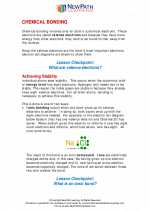 Chemical bonding
  Worksheet/Answer key
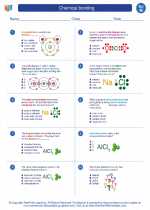 Chemical bonding Worksheet/Answer key
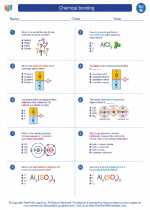 Chemical bonding Worksheet/Answer key
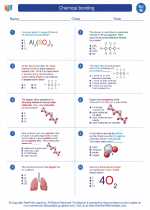 Chemical bonding Vocabulary/Answer key
 Chemical bonding
Worksheet/Answer keyWorksheet/Answer keyWorksheet/Answer keyVocabulary/Answer keyThe resources above cover the following skills:
Chemistry: Students will use scientific skills and processes to explain the composition, structure, and interactions of matter in order to support the predictability of structure and energy transformations.
Structure of Matter: Provide evidence to explain how compounds are produced. (No electron transfer)
Describe how elements form compounds and molecules.
Physical and Chemical Changes: Compare compounds and mixtures based on data from investigations and research.
Use evidence from data gathered to explain why the components of compounds cannot be separated using physical properties.
Analyze the results of research completed to develop a comparison of compounds and mixtures.