Introduction to Cosmology
Cosmology is the study of the origin, evolution, and eventual fate of the universe. It encompasses a wide range of topics including the Big Bang theory, the formation and structure of galaxies, the nature of dark matter and dark energy, and the ultimate destiny of the universe.
Key Concepts in Cosmology
- Big Bang Theory: The prevailing cosmological model that explains the early development of the universe. It proposes that the universe originated from a singular point and has been expanding ever since.
- Galaxy Formation: The process by which galaxies, including our own Milky Way, formed and evolved over billions of years.
- Dark Matter and Dark Energy: Two mysterious components that make up the majority of the universe's mass and energy, yet their exact nature remains unknown.
- Expansion of the Universe: Observations have shown that the universe is expanding, with distant galaxies moving away from us at an accelerating rate.
- Ultimate Fate of the Universe: Theories about how the universe might end, such as the Big Freeze, Big Rip, or Big Crunch scenarios.
Study Guide for Cosmology
To grasp the concepts of cosmology, it's important to explore the following topics:
- Understanding the evidence for the Big Bang theory, including cosmic microwave background radiation and the redshift of galaxies.
- Exploring the structure and classification of galaxies, as well as the role of supermassive black holes at their centers.
- Investigating the properties and implications of dark matter and dark energy, and their influence on the universe's evolution.
- Learning about the expansion of the universe and the concept of cosmic inflation.
- Considering the various hypotheses for the fate of the universe and the evidence supporting each scenario.
By delving into these topics, students can gain a comprehensive understanding of cosmology and the current state of our knowledge about the universe.
.◂Earth Science Worksheets and Study Guides High School. Weather I
Worksheet/Answer key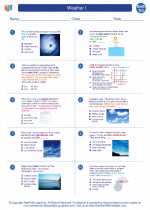 Weather I
  Worksheet/Answer key
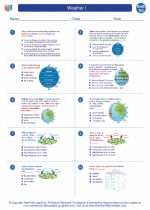 Weather I Worksheet/Answer key
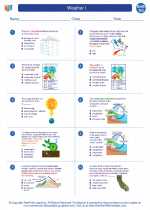 Weather I Worksheet/Answer key
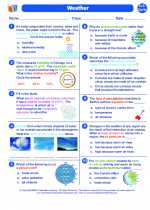 Weather I Vocabulary/Answer key
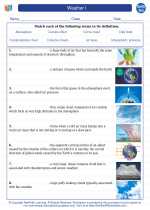 Weather I Vocabulary/Answer key
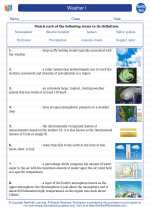 Weather I Vocabulary/Answer key
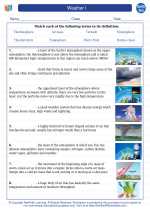 Weather I
Worksheet/Answer keyWorksheet/Answer keyWorksheet/Answer keyVocabulary/Answer keyVocabulary/Answer keyVocabulary/Answer keyThe resources above cover the following skills:
ENVIRONMENTAL SCIENCE
Earth and Human Activity
Develop and use models to trace the flow of water, nitrogen, and phosphorus through the hydrosphere, atmosphere, geosphere, and biosphere.