Consonants
A consonant is a speech sound that is produced by completely or partially blocking the flow of air as it passes through the vocal tract. Unlike vowels, which are produced with an open vocal tract, consonants are produced with a constriction or closure at some point along the vocal tract.
Types of Consonants
Consonants can be classified into several categories based on their manner of articulation and place of articulation. The manner of articulation refers to how the airflow is obstructed, while the place of articulation refers to where in the vocal tract the obstruction occurs.
Manner of Articulation
- Plosives: These are consonants produced by completely blocking the airflow and then releasing it, such as /p/, /b/, /t/, /d/, /k/, and /g/.
- Fricatives: These consonants are produced by narrowing the airflow to create friction, such as /f/, /v/, /s/, /z/, /sh/, and /zh/.
- Affricates: These are a combination of plosives and fricatives, such as /ch/ and /j/.
- Nasals: These consonants are produced by allowing the airflow to pass through the nasal cavity, such as /m/, /n/, and /ng/.
- Liquids: This category includes /l/ and /r/, which are characterized by a partial closure in the vocal tract.
- Glides: Also known as semivowels, these include /w/ and /y/, which have a slight closure in the vocal tract.
Place of Articulation
- Bilabial: Consonants produced using both lips, such as /p/, /b/, and /m/.
- Labiodental: These are produced with the lower lip against the upper teeth, such as /f/ and /v/.
- Interdental: Consonants produced by placing the tip of the tongue between the teeth, as in /th/ sounds.
- Alveolar: These are produced by the tongue against the alveolar ridge behind the upper front teeth, such as /t/, /d/, /s/, and /z/.
- Palatal: Consonants produced by raising the front part of the tongue to the hard palate, such as /sh/ and /zh/.
- Velar: Consonants produced by raising the back of the tongue to the soft palate, such as /k/, /g/, and /ng/.
Study Tips
Here are some tips to help you study and understand consonants:
- Practice identifying consonant sounds in words you hear and speak. Pay attention to where the airflow is obstructed and how the obstruction is created.
- Use mnemonic devices or visual aids to remember the different types and places of articulation for consonants.
- Listen to and repeat consonant sounds to improve your pronunciation and articulation.
- Work on tongue and lip exercises to improve your control over the articulators used in producing consonant sounds.
[Consonant] Related Worksheets and Study Guides:
.◂English Language Arts Worksheets and Study Guides First Grade. Daily Spiral Review (30)
Worksheet/Answer key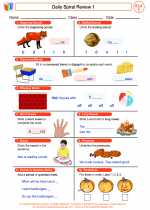 Daily Spiral Review 1
  Worksheet/Answer key
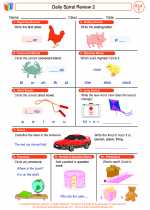 Daily Spiral Review 2 Worksheet/Answer key
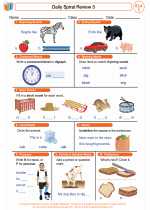 Daily Spiral Review 3 Worksheet/Answer key
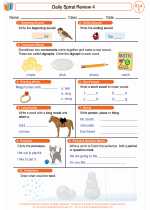 Daily Spiral Review 4 Worksheet/Answer key
 Daily Spiral Review 5 Worksheet/Answer key
 Daily Spiral Review 6 Worksheet/Answer key
 Daily Spiral Review 7 Worksheet/Answer key
 Daily Spiral Review 8 Worksheet/Answer key
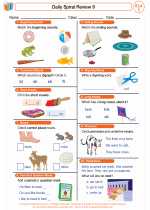 Daily Spiral Review 9 Worksheet/Answer key
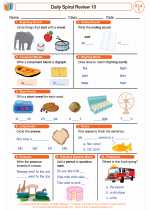 Daily Spiral Review 10 Worksheet/Answer key
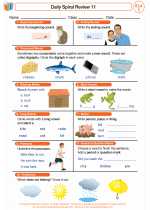 Daily Spiral Review 11 Worksheet/Answer key
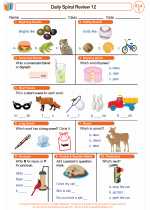 Daily Spiral Review 12 Worksheet/Answer key
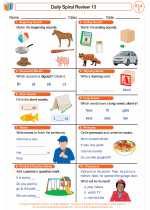 Daily Spiral Review 13 Worksheet/Answer key
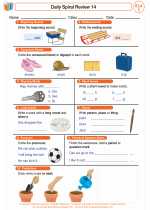 Daily Spiral Review 14 Worksheet/Answer key
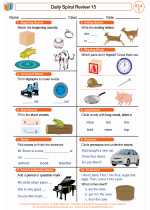 Daily Spiral Review 15 Worksheet/Answer key
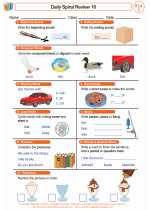 Daily Spiral Review 16 Worksheet/Answer key
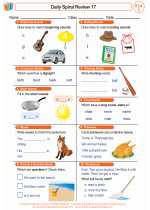 Daily Spiral Review 17 Worksheet/Answer key
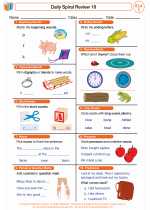 Daily Spiral Review 18 Worksheet/Answer key
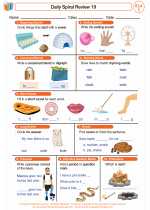 Daily Spiral Review 19 Worksheet/Answer key
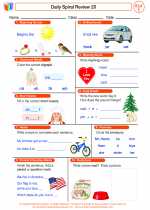 Daily Spiral Review 20 Worksheet/Answer key
 Daily Spiral Review 21 Worksheet/Answer key
 Daily Spiral Review 22 Worksheet/Answer key
 Daily Spiral Review 23 Worksheet/Answer key
 Daily Spiral Review 24 Worksheet/Answer key
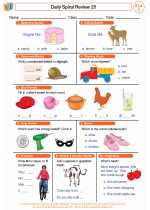 Daily Spiral Review 25 Worksheet/Answer key
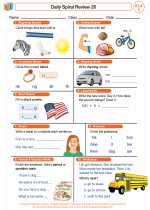 Daily Spiral Review 26 Worksheet/Answer key
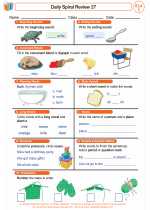 Daily Spiral Review 27 Worksheet/Answer key
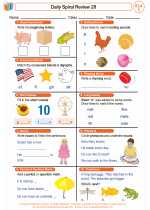 Daily Spiral Review 28 Worksheet/Answer key
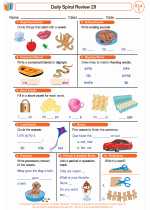 Daily Spiral Review 29 Worksheet/Answer key
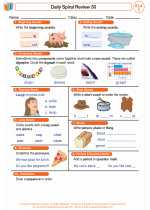 Daily Spiral Review 30
Worksheet/Answer keyWorksheet/Answer keyWorksheet/Answer keyWorksheet/Answer keyWorksheet/Answer keyWorksheet/Answer keyWorksheet/Answer keyWorksheet/Answer keyWorksheet/Answer keyWorksheet/Answer keyWorksheet/Answer keyWorksheet/Answer keyWorksheet/Answer keyWorksheet/Answer keyWorksheet/Answer keyWorksheet/Answer keyWorksheet/Answer keyWorksheet/Answer keyWorksheet/Answer keyWorksheet/Answer keyWorksheet/Answer keyWorksheet/Answer keyWorksheet/Answer keyWorksheet/Answer keyWorksheet/Answer keyWorksheet/Answer keyWorksheet/Answer keyWorksheet/Answer keyWorksheet/Answer key