Verbs
A verb is a word that expresses an action, occurrence, or state of being. Verbs are a crucial part of any sentence, as they convey the action or the state of being of the subject. In English, verbs can change form to indicate tense, mood, voice, and aspect.
Types of Verbs
There are several types of verbs, including:
- Action Verbs: These verbs express physical or mental actions, such as "run," "eat," "think," and "jump."
- Linking Verbs: Linking verbs connect the subject of a sentence to a subject complement, expressing a state of being or a condition. Examples include "is," "am," "are," "was," "were," and "seem."
- Helping Verbs: Also known as auxiliary verbs, helping verbs work in conjunction with the main verb to express shades of meaning related to tense, mood, voice, and aspect. Examples include "is," "have," "can," "will," and "should."
Verb Tenses
Verbs can also change form to indicate different tenses, which show the time of an action or the state of being. The main verb tenses in English include:
- Present Tense: Indicates actions happening now or general truths.
- Past Tense: Indicates actions that have already happened.
- Future Tense: Indicates actions that will happen in the future.
- Present Continuous Tense: Indicates actions that are happening at the present moment.
- Past Continuous Tense: Indicates actions that were ongoing in the past.
- Future Continuous Tense: Indicates actions that will be ongoing in the future.
- Present Perfect Tense: Indicates actions that were completed at an unspecified time in the past or that have relevance to the present.
- Past Perfect Tense: Indicates actions that were completed before a certain point in the past.
- Future Perfect Tense: Indicates actions that will be completed before a certain point in the future.
Study Guide
Here are a few tips for studying verbs:
- Identify the verb in a sentence and determine its type (action, linking, helping).
- Practice changing the verb to different tenses, such as present, past, and future.
- Conjugate verbs in different forms based on the subject (I, you, he/she/it, we, they).
- Recognize how helping verbs can change the meaning of a sentence.
- Use verbs in context by creating sentences that demonstrate different tenses and types of verbs.
[Verbs] Related Worksheets and Study Guides:
.◂English Language Arts Worksheets and Study Guides First Grade. Daily Spiral Review (30)
Worksheet/Answer key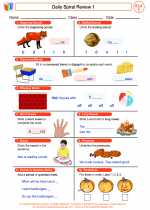 Daily Spiral Review 1
  Worksheet/Answer key
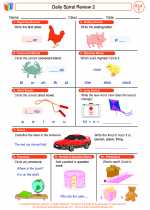 Daily Spiral Review 2 Worksheet/Answer key
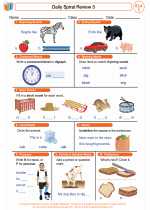 Daily Spiral Review 3 Worksheet/Answer key
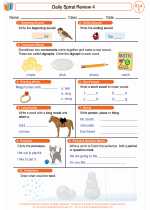 Daily Spiral Review 4 Worksheet/Answer key
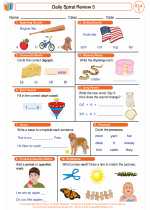 Daily Spiral Review 5 Worksheet/Answer key
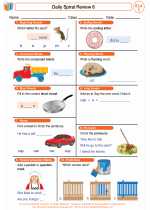 Daily Spiral Review 6 Worksheet/Answer key
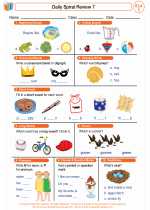 Daily Spiral Review 7 Worksheet/Answer key
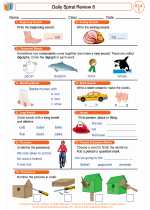 Daily Spiral Review 8 Worksheet/Answer key
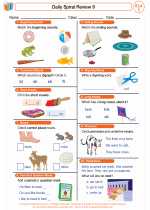 Daily Spiral Review 9 Worksheet/Answer key
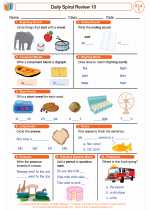 Daily Spiral Review 10 Worksheet/Answer key
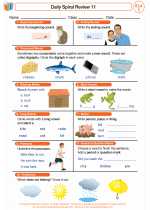 Daily Spiral Review 11 Worksheet/Answer key
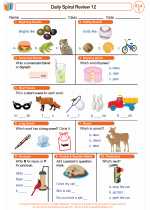 Daily Spiral Review 12 Worksheet/Answer key
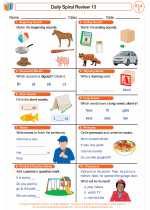 Daily Spiral Review 13 Worksheet/Answer key
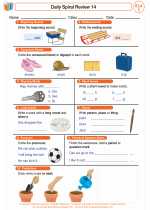 Daily Spiral Review 14 Worksheet/Answer key
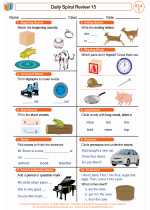 Daily Spiral Review 15 Worksheet/Answer key
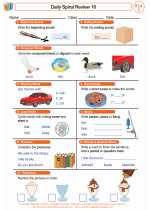 Daily Spiral Review 16 Worksheet/Answer key
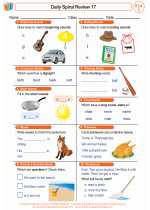 Daily Spiral Review 17 Worksheet/Answer key
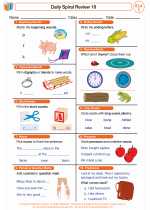 Daily Spiral Review 18 Worksheet/Answer key
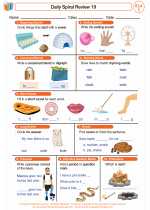 Daily Spiral Review 19 Worksheet/Answer key
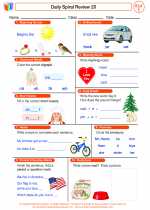 Daily Spiral Review 20 Worksheet/Answer key
 Daily Spiral Review 21 Worksheet/Answer key
 Daily Spiral Review 22 Worksheet/Answer key
 Daily Spiral Review 23 Worksheet/Answer key
 Daily Spiral Review 24 Worksheet/Answer key
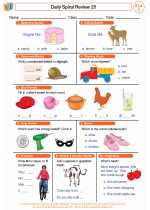 Daily Spiral Review 25 Worksheet/Answer key
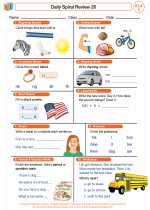 Daily Spiral Review 26 Worksheet/Answer key
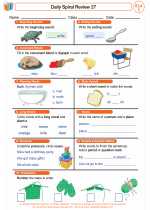 Daily Spiral Review 27 Worksheet/Answer key
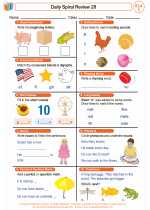 Daily Spiral Review 28 Worksheet/Answer key
 Daily Spiral Review 29 Worksheet/Answer key
 Daily Spiral Review 30
Worksheet/Answer keyWorksheet/Answer keyWorksheet/Answer keyWorksheet/Answer keyWorksheet/Answer keyWorksheet/Answer keyWorksheet/Answer keyWorksheet/Answer keyWorksheet/Answer keyWorksheet/Answer keyWorksheet/Answer keyWorksheet/Answer keyWorksheet/Answer keyWorksheet/Answer keyWorksheet/Answer keyWorksheet/Answer keyWorksheet/Answer keyWorksheet/Answer keyWorksheet/Answer keyWorksheet/Answer keyWorksheet/Answer keyWorksheet/Answer keyWorksheet/Answer keyWorksheet/Answer keyWorksheet/Answer keyWorksheet/Answer keyWorksheet/Answer keyWorksheet/Answer keyWorksheet/Answer key