Adjectives
Adjectives are words that describe or modify nouns or pronouns. They provide more information about the noun or pronoun by answering questions such as "What kind?" "How many?" or "Which one?"
Types of Adjectives:
- Descriptive Adjectives: These adjectives describe the qualities of a noun, such as color, size, shape, or texture. For example: red, large, round, soft.
- Demonstrative Adjectives: These adjectives are used to point out specific nouns and include words like this, that, these, those. For example: this book, those flowers.
- Quantitative Adjectives: These adjectives indicate the quantity or amount of a noun and include words like many, few, some, several. For example: many books, few apples.
- Proper Adjectives: These adjectives are derived from proper nouns and are capitalized. For example: French cuisine, Italian fashion.
- Interrogative Adjectives: These adjectives are used to ask questions about a noun and include words like which, what, whose. For example: which book, whose bag.
Study Guide:
Here are some important things to remember about adjectives:
- Adjectives can be used before a noun or after certain verbs.
- Adjectives can be used to compare two or more nouns, using the comparative and superlative forms.
- Adjectives can be modified by adverbs to indicate degree or intensity.
- Remember that adjectives do not change for singular or plural nouns.
- Be careful not to confuse adjectives with adverbs, which modify verbs, adjectives, or other adverbs.
Practice identifying adjectives in sentences and using them to describe nouns. Pay attention to the different types of adjectives and how they modify the nouns in different ways.
Understanding adjectives is essential for building descriptive and expressive language. Use adjectives to enhance your writing and make your descriptions more vivid and engaging.
[Adjectives] Related Worksheets and Study Guides:
.◂English Language Arts Worksheets and Study Guides Fourth Grade. Daily Spiral Review (30)
Worksheet/Answer key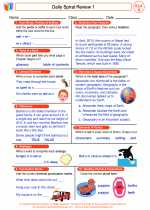 Daily Spiral Review 1
  Worksheet/Answer key
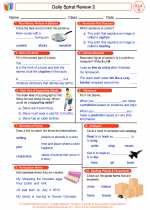 Daily Spiral Review 2 Worksheet/Answer key
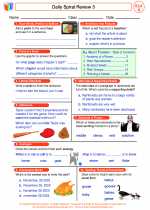 Daily Spiral Review 3 Worksheet/Answer key
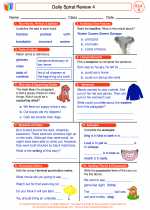 Daily Spiral Review 4 Worksheet/Answer key
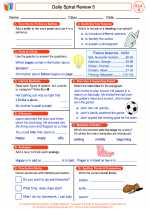 Daily Spiral Review 5 Worksheet/Answer key
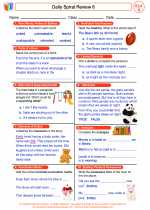 Daily Spiral Review 6 Worksheet/Answer key
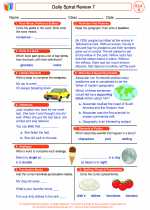 Daily Spiral Review 7 Worksheet/Answer key
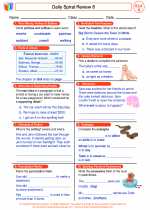 Daily Spiral Review 8 Worksheet/Answer key
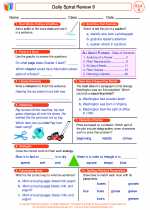 Daily Spiral Review 9 Worksheet/Answer key
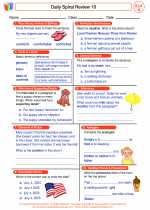 Daily Spiral Review 10 Worksheet/Answer key
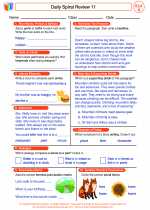 Daily Spiral Review 11 Worksheet/Answer key
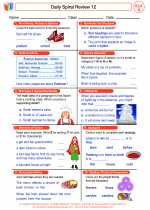 Daily Spiral Review 12 Worksheet/Answer key
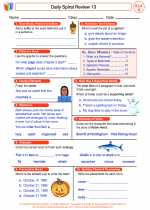 Daily Spiral Review 13 Worksheet/Answer key
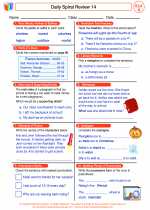 Daily Spiral Review 14 Worksheet/Answer key
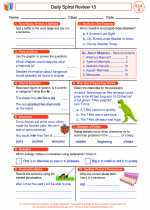 Daily Spiral Review 15 Worksheet/Answer key
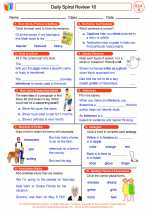 Daily Spiral Review 16 Worksheet/Answer key
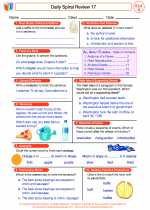 Daily Spiral Review 17 Worksheet/Answer key
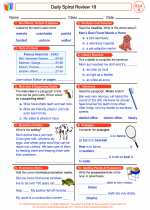 Daily Spiral Review 18 Worksheet/Answer key
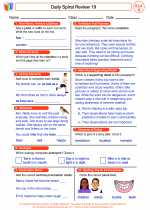 Daily Spiral Review 19 Worksheet/Answer key
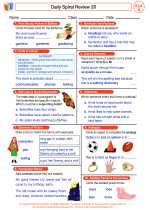 Daily Spiral Review 20 Worksheet/Answer key
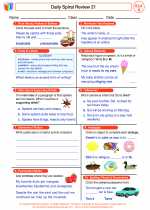 Daily Spiral Review 21 Worksheet/Answer key
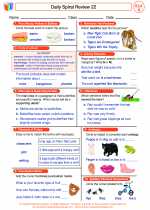 Daily Spiral Review 22 Worksheet/Answer key
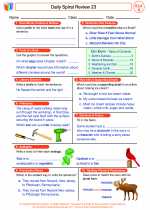 Daily Spiral Review 23 Worksheet/Answer key
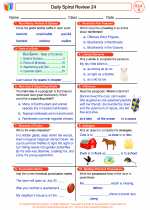 Daily Spiral Review 24 Worksheet/Answer key
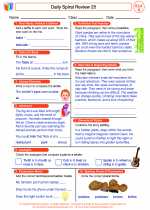 Daily Spiral Review 25 Worksheet/Answer key
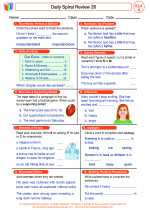 Daily Spiral Review 26 Worksheet/Answer key
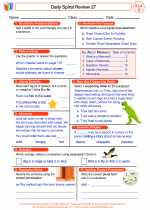 Daily Spiral Review 27 Worksheet/Answer key
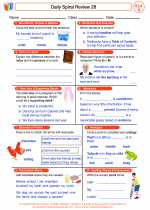 Daily Spiral Review 28 Worksheet/Answer key
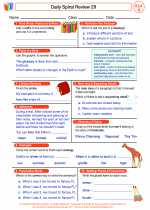 Daily Spiral Review 29 Worksheet/Answer key
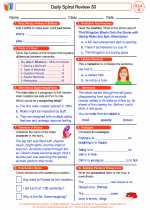 Daily Spiral Review 30
Worksheet/Answer keyWorksheet/Answer keyWorksheet/Answer keyWorksheet/Answer keyWorksheet/Answer keyWorksheet/Answer keyWorksheet/Answer keyWorksheet/Answer keyWorksheet/Answer keyWorksheet/Answer keyWorksheet/Answer keyWorksheet/Answer keyWorksheet/Answer keyWorksheet/Answer keyWorksheet/Answer keyWorksheet/Answer keyWorksheet/Answer keyWorksheet/Answer keyWorksheet/Answer keyWorksheet/Answer keyWorksheet/Answer keyWorksheet/Answer keyWorksheet/Answer keyWorksheet/Answer keyWorksheet/Answer keyWorksheet/Answer keyWorksheet/Answer keyWorksheet/Answer keyWorksheet/Answer key