Inferences Study Guide
What are Inferences?
Inferences are conclusions or deductions made based on evidence and reasoning rather than explicit statements. In literature, readers often make inferences to understand the deeper meaning of a text.
How to Make Inferences:
- Observe the Details: Pay close attention to details, descriptions, and actions in the text.
- Identify Patterns: Look for recurring themes, symbols, or language that may indicate underlying meanings.
- Consider Context: Think about the setting, characters, and events to understand the context in which the inferences are being made.
- Draw Conclusions: Based on the evidence and reasoning, draw conclusions that are not explicitly stated in the text.
Examples of Inferences:
- Example 1: In a story, a character is described as looking nervous and fidgety. From this, a reader can infer that the character may be anxious or worried about something.
- Example 2: A character in a novel consistently avoids discussing their past. From this, a reader can infer that the character may have a troubled or secretive history.
Why are Inferences Important?
Making inferences is a critical reading skill that allows readers to go beyond the surface of a text and understand the deeper meanings, motivations, and themes present in the material. It encourages critical thinking and helps readers engage more deeply with the text.
Practice Making Inferences:
Below are some questions to help you practice making inferences:
- What can you infer about a character based on their actions and dialogue?
- How does the setting of the story contribute to the overall mood or theme?
- What underlying message or lesson can be inferred from the events in the story?
[Inferences] Related Worksheets and Study Guides:
.◂English Language Arts Worksheets and Study Guides Sixth Grade. Cause/Effect, Fact/Opinion
Study Guide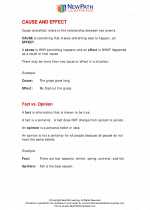 Cause/Effect, Fact/Opinion
  Activity Lesson
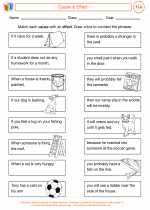 Cause and Effect Worksheet/Answer key
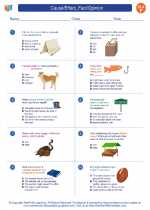 Cause/Effect, Fact/Opinion Worksheet/Answer key
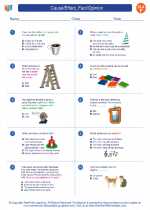 Cause/Effect, Fact/Opinion Worksheet/Answer key
 Cause/Effect, Fact/Opinion Worksheet/Answer key
 Mountain Thinking Worksheet/Answer key
 Letter to a Character
Activity LessonWorksheet/Answer keyWorksheet/Answer keyWorksheet/Answer keyWorksheet/Answer keyWorksheet/Answer keyThe resources above cover the following skills:
Reading Standards for Literacy in History/Social Studies
Integration of Knowledge and Ideas
Distinguish among fact, opinion, and reasoned judgment in a text.