Prepositions
A preposition is a word that shows the relationship between a noun or pronoun and other words in a sentence. Prepositions are usually placed before a noun or a pronoun to show its relationship to another word in the sentence.
Examples of Prepositions:
- The book is on the table.
- The cat is under the bed.
- We walked across the bridge.
- I will meet you at the library.
Functions of Prepositions:
Prepositions can show various relationships such as location, direction, time, and manner. They are essential for constructing meaningful sentences and providing important details about the relationships between words.
Common Prepositions:
Here are some common prepositions:
- about, above, across, after, against, along, among, around, at, before, behind, below, beneath, beside, between, beyond, by, down, during, except, for, from, in, inside, into, like, near, of, off, on, onto, out, outside, over, past, through, to, toward, under, until, up, upon, with, within, without
Study Guide:
To understand and use prepositions effectively, consider the following study guide:
- Learn the common prepositions and their usage in sentences.
- Identify the noun or pronoun that the preposition relates to in a sentence.
- Practice by constructing sentences using different prepositions to convey various relationships.
- Use prepositions to provide detailed descriptions and information in your writing.
- Review and edit your work to ensure the correct placement and usage of prepositions.
Understanding prepositions is crucial for constructing clear and coherent sentences. By mastering prepositions, you can enhance your writing and communication skills.
[Preposition] Related Worksheets and Study Guides:
.◂English Language Arts Worksheets and Study Guides Seventh Grade. Figurative Language
Study Guide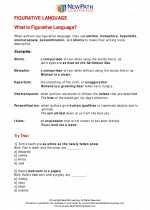 Figurative Language
  Activity Lesson
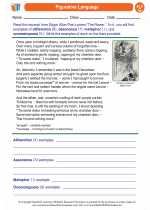 Figurative Language Worksheet/Answer key
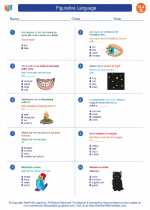 Figurative Language Worksheet/Answer key
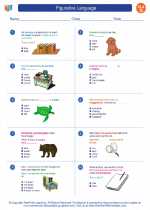 Figurative Language Worksheet/Answer key
 Figurative Language Worksheet/Answer key
 Figurative Language
Activity LessonWorksheet/Answer keyWorksheet/Answer keyWorksheet/Answer keyWorksheet/Answer keyThe resources above cover the following skills:
Students apply knowledge of language structure, language conventions (e.g., spelling and punctuation), media techniques, figurative language, and genre to create, critique, and discuss print and nonprint texts. (NCTE)