An interjection is a part of speech that expresses strong feelings or emotions. It is used to convey a sudden or strong outburst of emotion, such as excitement, surprise, anger, or joy. Interjections are often followed by an exclamation point or a comma to indicate the strong emotion being expressed.
Common examples of interjections include:
- Wow!
- Oh no!
- Yikes!
- Hey!
- Bravo!
It's important to note that interjections are not grammatically connected to the rest of the sentence. They stand alone and are used to convey the speaker's emotions. In writing, interjections can add depth and emotion to a character's dialogue.
Study Guide for Interjections:
- What is an interjection?
An interjection is a part of speech that expresses strong feelings or emotions. - How are interjections used in writing?
Interjections are used to convey a sudden or strong outburst of emotion, such as excitement, surprise, anger, or joy. They are often followed by an exclamation point or a comma. - Give examples of interjections.
Common examples of interjections include "Wow!", "Oh no!", "Yikes!", "Hey!", and "Bravo!" - How are interjections grammatically connected to a sentence?
Interjections are not grammatically connected to the rest of the sentence. They stand alone and are used to convey the speaker's emotions. - What purpose do interjections serve in writing?
In writing, interjections can add depth and emotion to a character's dialogue.
[Interjection] Related Worksheets and Study Guides:
.◂English Language Arts Worksheets and Study Guides Seventh Grade. Kinds of Sentences
Study Guide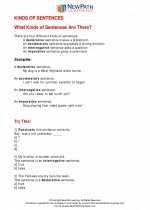 Kinds of Sentences
  Activity Lesson
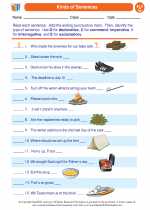 Kinds of Sentences Worksheet/Answer key
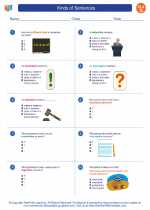 Kinds of Sentences Worksheet/Answer key
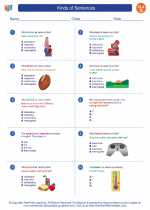 Kinds of Sentences Worksheet/Answer key
 Kinds of Sentences Worksheet/Answer key
 Kinds of Sentences
Activity LessonWorksheet/Answer keyWorksheet/Answer keyWorksheet/Answer keyWorksheet/Answer keyThe resources above cover the following skills:
WRITING
WRITING
Conventions of Standard English: Grammar and Usage/ Capitalization, Punctuation, and Spelling
Demonstrate command of English grammar and usage, focusing on:
Usage – Writing simple, compound, complex, and compound-complex sentences; recognizing and correcting sentence fragments and run-ons; varying sentence patterns for meaning, reader interest, and style.