Interjection
An interjection is a part of speech that expresses strong feelings or emotions. It is often used to convey a sudden or intense reaction, such as surprise, joy, anger, or excitement. Interjections are typically standalone words or phrases that are used to add emphasis or emotion to a sentence. They are commonly followed by an exclamation mark to indicate the strong emotion being expressed.
Examples of Interjections
Some common examples of interjections include:
- Wow!
- Oh no!
- Yikes!
- Well,
- Alas!
- Hey!
Study Guide
When studying interjections, it's important to understand their role in adding emotion and emphasis to language. Here are some key points to consider:
- Identify Interjections: Practice identifying interjections in sentences and understanding the emotions they convey.
- Punctuation: Learn how interjections are punctuated, typically with an exclamation mark to indicate strong emotion.
- Context: Consider the context in which interjections are used and how they contribute to the overall tone and meaning of a sentence or conversation.
- Usage: Explore the different ways interjections can be used to express various emotions, such as surprise, frustration, or excitement.
By studying interjections, you can enhance your understanding of how language is used to convey emotion and add emphasis to communication.
[Interjection] Related Worksheets and Study Guides:
.◂English Language Arts Worksheets and Study Guides Eighth Grade. Prepositions, Conjunctions, and Interjections
Study Guide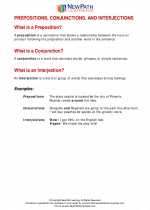 Prepositions, Conjunctions, and Interjections
  Activity Lesson
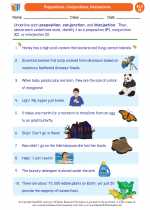 Prepositions, Conjunctions, Interjections Worksheet/Answer key
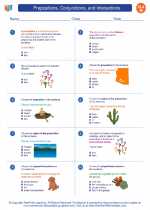 Prepositions, Conjunctions, and Interjections Worksheet/Answer key
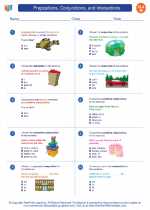 Prepositions, Conjunctions, and Interjections Worksheet/Answer key
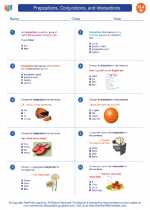 Prepositions, Conjunctions, and Interjections Worksheet/Answer key
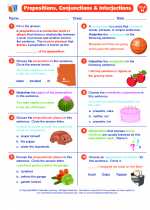 Prepositions, Conjunctions, and Interjections
Activity LessonWorksheet/Answer keyWorksheet/Answer keyWorksheet/Answer keyWorksheet/Answer keyThe resources above cover the following skills:
Controlling Language
Apply knowledge of grammar concepts and skills to control oral and written language
Compose simple, compound, complex, and compound-complex sentences using independent, dependent, restrictive, and nonrestrictive clauses; transitions; conjunctions; and appropriate punctuation to connect ideas