Cone
In math, a cone is a three-dimensional geometric shape that has a circular base and a pointed top called the vertex. The surface of a cone is made up of the curved surface and the flat base.
Key Concepts
Here are the key concepts related to cones:
- Base: The circular face at the bottom of the cone.
- Vertex: The pointy top of the cone.
- Height: The distance from the base to the vertex.
- Slant Height: The distance from the base to the vertex along the curved surface.
- Curved Surface: The surface that connects the base to the vertex.
- Volume: The amount of space inside the cone.
Formulas
Here are the formulas related to cones:
- Curved Surface Area: π * r * l, where r is the radius of the base and l is the slant height.
- Volume: (1/3) * π * r2 * h, where r is the radius of the base and h is the height.
Example Problems
Let's solve some example problems to understand the concepts better:
- Find the curved surface area of a cone with radius 5 cm and slant height 8 cm.
- Calculate the volume of a cone with radius 3 cm and height 10 cm.
Study Tips
Here are some tips to remember when studying cones:
- Understand the difference between the base and the vertex of a cone.
- Practice using the formulas for curved surface area and volume.
- Visualize real-life objects that are shaped like cones, such as ice cream cones or traffic cones.
◂Math Worksheets and Study Guides First Grade. Daily Spiral Review (30)
Worksheet/Answer key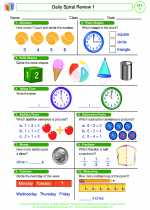 Daily Spiral Review 1, Grade 1
  Worksheet/Answer key
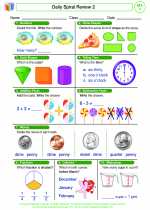 Daily Spiral Review 2, Grade 1 Worksheet/Answer key
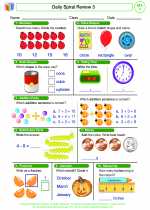 Daily Spiral Review 3, Grade 1 Worksheet/Answer key
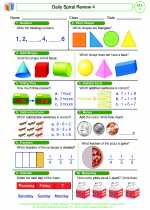 Daily Spiral Review 4, Grade 1 Worksheet/Answer key
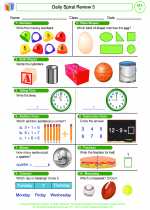 Daily Spiral Review 5, Grade 1 Worksheet/Answer key
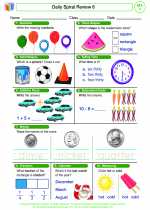 Daily Spiral Review 6, Grade 1 Worksheet/Answer key
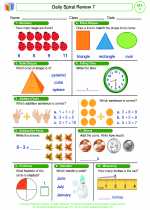 Daily Spiral Review 7, Grade 1 Worksheet/Answer key
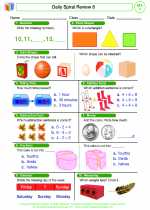 Daily Spiral Review 8, Grade 1 Worksheet/Answer key
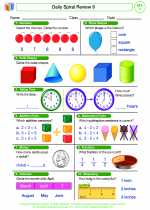 Daily Spiral Review 9, Grade 1 Worksheet/Answer key
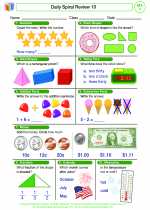 Daily Spiral Review 10, Grade 1 Worksheet/Answer key
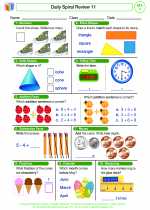 Daily Spiral Review 11, Grade 1 Worksheet/Answer key
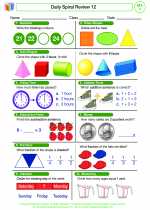 Daily Spiral Review 12, Grade 1 Worksheet/Answer key
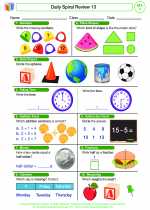 Daily Spiral Review 13, Grade 1 Worksheet/Answer key
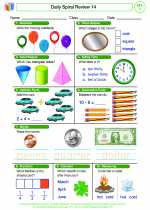 Daily Spiral Review 14, Grade 1 Worksheet/Answer key
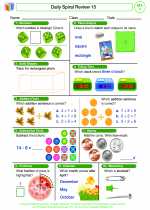 Daily Spiral Review 15, Grade 1 Worksheet/Answer key
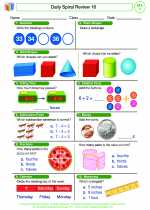 Daily Spiral Review 16, Grade 1 Worksheet/Answer key
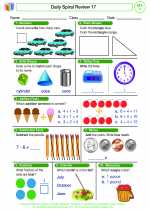 Daily Spiral Review 17, Grade 1 Worksheet/Answer key
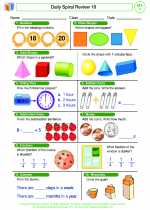 Daily Spiral Review 18, Grade 1 Worksheet/Answer key
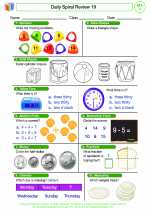 Daily Spiral Review 19, Grade 1 Worksheet/Answer key
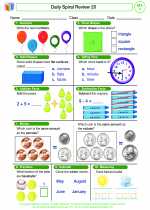 Daily Spiral Review 20, Grade 1 Worksheet/Answer key
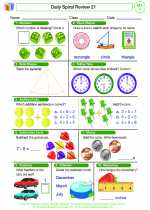 Daily Spiral Review 21, Grade 1 Worksheet/Answer key
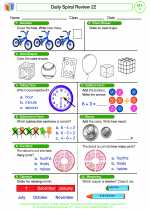 Daily Spiral Review 22, Grade 1 Worksheet/Answer key
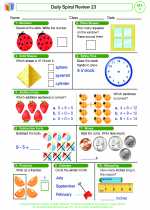 Daily Spiral Review 23, Grade 1 Worksheet/Answer key
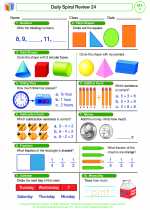 Daily Spiral Review 24, Grade 1 Worksheet/Answer key
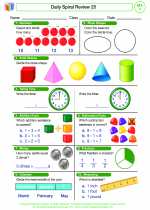 Daily Spiral Review 25, Grade 1 Worksheet/Answer key
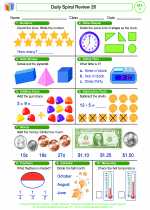 Daily Spiral Review 26, Grade 1 Worksheet/Answer key
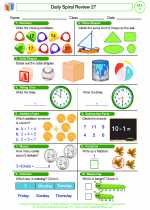 Daily Spiral Review 27, Grade 1 Worksheet/Answer key
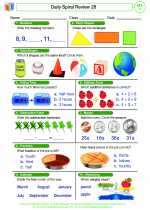 Daily Spiral Review 28, Grade 1 Worksheet/Answer key
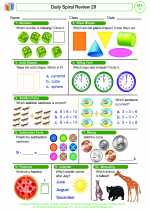 Daily Spiral Review 29, Grade 1 Worksheet/Answer key
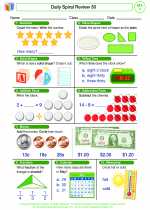 Daily Spiral Review 30, Grade 1
Worksheet/Answer keyWorksheet/Answer keyWorksheet/Answer keyWorksheet/Answer keyWorksheet/Answer keyWorksheet/Answer keyWorksheet/Answer keyWorksheet/Answer keyWorksheet/Answer keyWorksheet/Answer keyWorksheet/Answer keyWorksheet/Answer keyWorksheet/Answer keyWorksheet/Answer keyWorksheet/Answer keyWorksheet/Answer keyWorksheet/Answer keyWorksheet/Answer keyWorksheet/Answer keyWorksheet/Answer keyWorksheet/Answer keyWorksheet/Answer keyWorksheet/Answer keyWorksheet/Answer keyWorksheet/Answer keyWorksheet/Answer keyWorksheet/Answer keyWorksheet/Answer keyWorksheet/Answer key