Proper Fraction
A proper fraction is a fraction where the numerator (the top number) is less than the denominator (the bottom number).
For example, in the fraction 3/4, the numerator (3) is less than the denominator (4), so it is a proper fraction.
Proper fractions are always less than 1, and they represent parts of a whole or parts of a set.
Study Guide
- What is a proper fraction?
- Give an example of a proper fraction.
- Are proper fractions always less than 1?
- What do proper fractions represent?
A proper fraction is a fraction where the numerator is less than the denominator.
3/5 is an example of a proper fraction because the numerator (3) is less than the denominator (5).
Yes, proper fractions are always less than 1.
Proper fractions represent parts of a whole or parts of a set.
Remember, when dealing with proper fractions, the numerator is always smaller than the denominator!
[Proper Fraction] Related Worksheets and Study Guides:
.◂Math Worksheets and Study Guides Second Grade. Fractions Greater Than or Less Than 1/2
Study Guide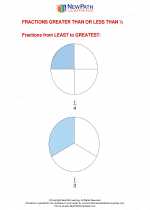 Fractions Greater Than or Less Than 1/2
  Worksheet/Answer key
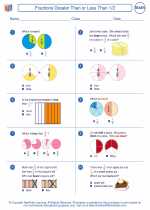 Fractions Greater Than or Less Than 1/2 Worksheet/Answer key
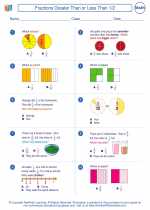 Fractions Greater Than or Less Than 1/2 Worksheet/Answer key
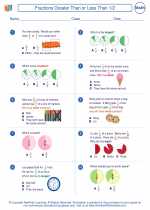 Fractions Greater Than or Less Than 1/2 Worksheet/Answer key
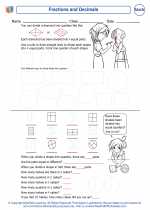 Fractions and Decimals Worksheet/Answer key
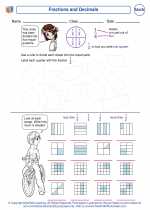 Fractions and Decimals Vocabulary/Answer key
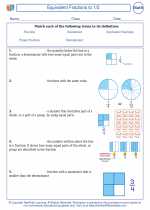 Fractions Greater Than or Less Than 1/2
Worksheet/Answer keyWorksheet/Answer keyWorksheet/Answer keyWorksheet/Answer keyWorksheet/Answer keyVocabulary/Answer keyCreate And Print more Fractions worksheets with Comparing Fractions, Equivalent Fractions, and Simplifying Fractions
The resources above cover the following skills:
Number and Operations (NCTM)
Understand numbers, ways of representing numbers, relationships among numbers, and number systems.
Understand and represent commonly used fractions, such as 1/4, 1/3, and 1/2.