Convection
Convection is the transfer of heat through the movement of a fluid, such as air or water. It occurs when the warmer, less dense fluid rises, and the cooler, denser fluid sinks. This creates a continuous circulation pattern, which helps to distribute heat throughout the fluid.
Key Concepts
- Fluid Movement: Convection requires the movement of a fluid, which can be a liquid or a gas. As the fluid is heated, it becomes less dense and rises, while the cooler, denser fluid sinks. This creates a circular motion within the fluid, allowing heat to be transferred.
- Natural and Forced Convection: Convection can occur naturally, such as when hot air rises and cold air sinks, or it can be forced, such as when a fan or a pump is used to create fluid movement.
- Applications: Convection is a key process in many natural phenomena, such as the heating of the Earth's atmosphere and the circulation of ocean currents. It is also utilized in various human-made systems, including heating and cooling systems, cooking, and industrial processes.
Study Guide
To understand convection better, consider the following study guide:
- Define convection and explain how it differs from conduction and radiation.
- Describe the role of fluid movement in the process of convection.
- Differentiate between natural and forced convection, providing examples of each.
- Discuss the practical applications of convection in everyday life and various industries.
- Apply the concept of convection to solve problems related to heat transfer and fluid dynamics.
◂Math Worksheets and Study Guides Sixth Grade. Division
Study Guide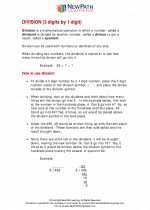 Division
  Worksheet/Answer key
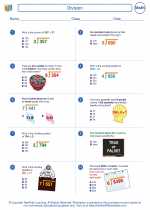 Division Worksheet/Answer key
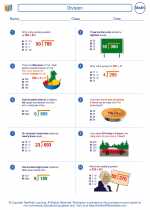 Division Worksheet/Answer key
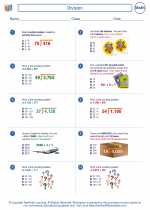 Division
Worksheet/Answer keyWorksheet/Answer keyWorksheet/Answer keyThe resources above cover the following skills:
Connections to the Grade 6 Focal Points (NCTM)
Number and Operations: Students' work in dividing fractions shows them that they can express the result of dividing two whole numbers as a fraction (viewed as parts of a whole). Students then extend their work in grade 5 with division of whole numbers to give mixed number and decimal solutions to division problems with whole numbers. They recognize that ratio tables not only derive from rows in the multiplication table but also connect with equivalent fractions. Students distinguish multiplicative comparisons from additive comparisons.