Pancreas
The pancreas is a vital organ located in the abdomen, behind the stomach. It plays a crucial role in the digestive and endocrine systems.
Anatomy of the Pancreas
The pancreas is a long, flat gland that is approximately six inches in length. It is situated horizontally across the abdomen, with its head on the right and its tail on the left. The pancreas can be divided into three main regions: the head, the body, and the tail.
Functions of the Pancreas
The pancreas serves two primary functions: exocrine and endocrine.
Exocrine Function:
- The exocrine function of the pancreas involves the production of digestive enzymes that are released into the small intestine to aid in the digestion of fats, proteins, and carbohydrates.
- These enzymes include amylase, lipase, and proteases, which play a crucial role in breaking down food particles into smaller molecules that can be absorbed by the body.
Endocrine Function:
- The endocrine function of the pancreas involves the production and secretion of hormones, primarily insulin and glucagon, which regulate blood sugar levels.
- Insulin helps lower blood sugar levels by promoting the uptake of glucose by cells, while glucagon raises blood sugar levels by stimulating the liver to release stored glucose into the bloodstream.
Common Pancreatic Disorders
Several disorders can affect the pancreas, including:
- Pancreatitis: inflammation of the pancreas, often caused by gallstones or excessive alcohol consumption.
- Diabetes: a condition characterized by the body's inability to regulate blood sugar levels, often due to insufficient insulin production by the pancreas.
- Pancreatic cancer: a serious and often fatal form of cancer that originates in the tissues of the pancreas.
Study Guide
To gain a comprehensive understanding of the pancreas, consider the following study topics:
- Anatomy of the pancreas, including its structure and location within the body.
- The exocrine function of the pancreas, focusing on the production and release of digestive enzymes.
- The endocrine function of the pancreas, with a specific emphasis on the roles of insulin and glucagon in regulating blood sugar levels.
- Common disorders affecting the pancreas, including their causes, symptoms, and potential treatments.
By mastering these topics, you will develop a strong grasp of the pancreas and its crucial role in maintaining overall health.
.◂Physics Worksheets and Study Guides High School. Thermodynamics
Worksheet/Answer key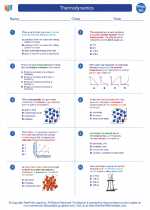 Thermodynamics
  Worksheet/Answer key
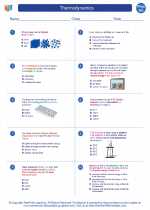 Thermodynamics Worksheet/Answer key
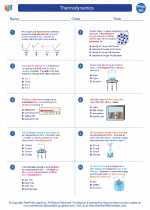 Thermodynamics Worksheet/Answer key
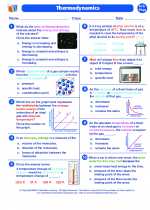 Thermodynamics
Worksheet/Answer keyWorksheet/Answer keyWorksheet/Answer keyThe resources above cover the following skills:
PHYSICAL SCIENCE (NGSS)
Matter and Its Interactions
Students who demonstrate understanding can:
Develop a model to illustrate that the release or absorption of energy from a chemical reaction system depends upon the changes in total bond energy.
Energy
Students who demonstrate understanding can:
Create a computational model to calculate the change in the energy of one component in a system when the change in energy of the other component(s) and energy flows in and out of the system are known.
Plan and conduct an investigation to provide evidence that the transfer of thermal energy when two components of different temperature are combined within a closed system results in a more uniform energy distribution among the components in the system (second law of thermodynamics).