Types of Tectonic Plate Boundaries
There are three main types of plate boundaries:- Divergent Boundaries: At divergent boundaries, tectonic plates move away from each other. This movement can create rift valleys and mid-ocean ridges.
- Convergent Boundaries: Convergent boundaries occur when tectonic plates move towards each other. This movement can lead to the formation of mountains, volcanic arcs, and deep ocean trenches.
- Transform Boundaries: At transform boundaries, tectonic plates slide past each other horizontally. This movement can cause earthquakes.
Effects of Plate Movement
The movement of tectonic plates has several effects on the Earth's surface:- Earthquakes: When tectonic plates grind against each other or collide, they can cause seismic activity.
- Volcanic Activity: Convergent boundaries can lead to the formation of volcanoes, as one tectonic plate is forced beneath another in a process called subduction.
- Mountain Formation: The collision of tectonic plates at convergent boundaries can result in the uplift of land, leading to the formation of mountain ranges.
- Continental Drift: Over millions of years, the movement of tectonic plates has caused continents to shift and change their positions on the Earth's surface.
Studying Tectonic Plates
To learn more about tectonic plates, you can explore the following topics:- Plate Tectonics Theory
- Seafloor Spreading
- Subduction Zones
- Geological Features Associated with Plate Boundaries
- Impact of Plate Tectonics on Earth's Climate
Conclusion
[Tectonic Plates] Related Worksheets and Study Guides:
.◂Science Worksheets and Study Guides Third Grade. Weather
Lesson Plan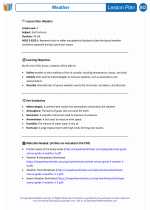 Weather - Bundle
  Study Guide
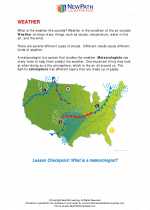 Weather Worksheet/Answer key
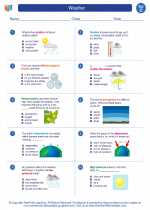 Weather Worksheet/Answer key
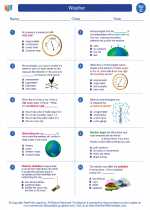 Weather Worksheet/Answer key
 Weather Vocabulary/Answer key
 Weather Vocabulary/Answer key
 Weather
Study GuideWorksheet/Answer keyWorksheet/Answer keyWorksheet/Answer keyVocabulary/Answer keyVocabulary/Answer keyThe resources above cover the following skills:
EARTH AND SPACE SCIENCE (NGSS)
Earth’s Systems
Students who demonstrate understanding can:
Represent data in tables and graphical displays to describe typical weather conditions expected during a particular season.