What is an Ampere?
An ampere is defined as the constant current which, if maintained in two straight parallel conductors of infinite length, of negligible circular cross-section, and placed 1 meter apart in a vacuum, would produce between these conductors a force equal to 2 x 10^-7 newton per meter of length.Understanding Electric Current
Electric current is the flow of electric charge through a conductor. It is measured in amperes and is represented by the symbol "I". The flow of electric current is similar to the flow of water in a pipe. The rate at which electric charges flow past a point in a circuit is measured in amperes.Calculating Amperes
The relationship between electric current, voltage, and resistance in a circuit is described by Ohm's law, which states that I (current in amperes) = V (voltage in volts) / R (resistance in ohms). This formula shows that the current in a circuit is directly proportional to the voltage and inversely proportional to the resistance.Study Guide for Amperes
To understand amperes and electric current, it is important to focus on the following key points:- Definition of amperes and its symbol "A".
- Understanding the concept of electric current as the flow of electric charge.
- Ohm's law and its application in calculating current, voltage, and resistance in a circuit.
- Real-life examples of amperes and electric current in everyday devices and systems.
[Amperes] Related Worksheets and Study Guides:
.◂Science Worksheets and Study Guides Fourth Grade. Earth - Inside and Out
Lesson Plan Earth - Inside and Out - Bundle
  Study Guide
 Earth - Inside and Out Activity Lesson
 Earth – Inside & Out Worksheet/Answer key
 Earth - Inside and Out Worksheet/Answer key
 Earth - Inside and Out Worksheet/Answer key
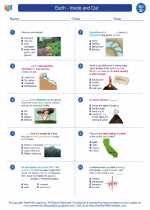 Earth - Inside and Out Worksheet/Answer key
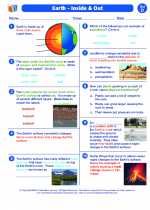 Earth - Inside and Out Vocabulary/Answer key
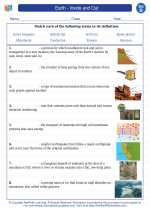 Earth - Inside and Out Vocabulary/Answer key
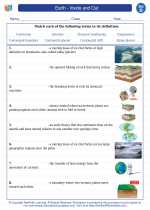 Earth - Inside and Out Vocabulary/Answer key
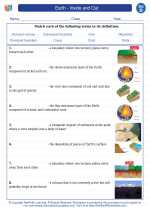 Earth - Inside and Out Vocabulary/Answer key
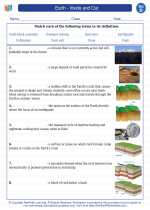 Earth - Inside and Out Vocabulary/Answer key
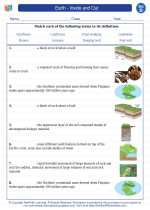 Earth - Inside and Out Vocabulary/Answer key
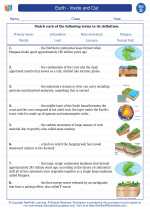 Earth - Inside and Out Vocabulary/Answer key
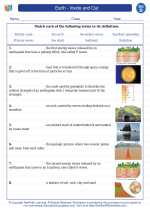 Earth - Inside and Out Vocabulary/Answer key
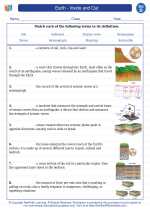 Earth - Inside and Out Vocabulary/Answer key
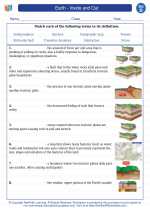 Earth - Inside and Out
Study GuideActivity LessonWorksheet/Answer keyWorksheet/Answer keyWorksheet/Answer keyWorksheet/Answer keyVocabulary/Answer keyVocabulary/Answer keyVocabulary/Answer keyVocabulary/Answer keyVocabulary/Answer keyVocabulary/Answer keyVocabulary/Answer keyVocabulary/Answer keyVocabulary/Answer keyThe resources above cover the following skills:
EARTH AND SPACE SCIENCE (NGSS)
Earth’s Systems
Students who demonstrate understanding can:
Make observations and/or measurements to provide evidence of the effects of weathering or the rate of erosion by water, ice, wind, or vegetation.