Porifera
Porifera is a phylum of simple, aquatic animals commonly known as sponges. They are among the most primitive of all animals and are found in marine environments all over the world. Sponges are unique in that they lack true tissues and organs, and instead have a porous body structure that allows water to flow through them, from which they obtain food and oxygen.
Characteristics of Porifera
- Body Structure: Sponges have a simple body plan with numerous pores and channels through which water flows. These channels are lined with specialized cells called choanocytes, which help in capturing food particles.
- Skeletal Structure: Most sponges have a skeleton made of a protein called spongin or mineral spicules made of calcium carbonate or silica. These structures provide support and protection to the sponge's soft body.
- Reproduction: Sponges can reproduce both sexually and asexually. They can produce sperm and eggs that are released into the water for fertilization, or they can produce buds or gemmules for asexual reproduction.
- Feeding: Sponges are filter feeders, meaning they obtain food by filtering tiny organisms and organic particles from the water that passes through their bodies.
Study Guide for Porifera
Here are some key points to remember when studying Porifera:
- What are the main characteristics of Porifera?
- Describe the body structure of sponges and its significance in their feeding mechanism.
- Explain the different types of skeletal structures found in sponges.
- Discuss the methods of reproduction in Porifera.
- How do sponges obtain their food, and what role do choanocytes play in this process?
Understanding the unique characteristics and life processes of Porifera is essential for gaining insight into the diversity of animal life on Earth.
[Porifera] Related Worksheets and Study Guides:
.◂Science Worksheets and Study Guides Sixth Grade. Introduction to Animals
Lesson Plan Introduction to Animals - Bundle
  Study Guide
 Introduction to Animals Activity Lesson
 Introduction to Animals Worksheet/Answer key
 Introduction to Animals Worksheet/Answer key
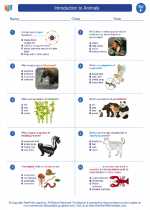 Introduction to Animals Worksheet/Answer key
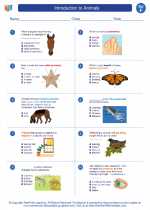 Introduction to Animals Vocabulary/Answer key
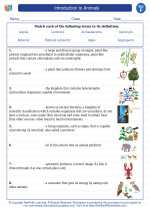 Introduction to Animals Vocabulary/Answer key
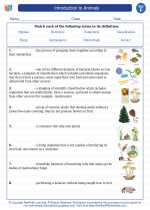 Introduction to Animals Vocabulary/Answer key
 Introduction to Animals Vocabulary/Answer key
 Introduction to Animals
Study GuideActivity LessonWorksheet/Answer keyWorksheet/Answer keyWorksheet/Answer keyVocabulary/Answer keyVocabulary/Answer keyVocabulary/Answer keyVocabulary/Answer keyThe resources above cover the following skills:
LIFE SCIENCE
From Molecules to Organisms: Structures and Processes