Instinctive Behavior
Instinctive behavior, also known as innate behavior, is the inherent behavior that animals are born with. It is not learned or acquired through experience, but rather it is genetically programmed.
Characteristics of Instinctive Behavior
- Innate: Instinctive behavior is present from birth and does not require learning.
- Genetically Programmed: The behavior is controlled by the animal's genetic makeup and is often species-specific.
- Complexity: Instinctive behaviors can be quite complex and may involve intricate sequences of actions.
- Adaptive: Instinctive behaviors have evolved over time to help animals survive and reproduce in their environments.
Examples of Instinctive Behavior
There are numerous examples of instinctive behavior in the animal kingdom, including:
- Mating Rituals: Courtship and mating behaviors, such as bird displays and dances, are often instinctive.
- Migration: Many animals, such as birds and butterflies, instinctively migrate over long distances to find food or suitable breeding grounds.
- Parental Care: Nest-building, feeding, and protecting offspring are instinctive behaviors seen in many animal species.
- Hunting and Foraging: Predatory behaviors, such as stalking, pouncing, and scavenging, are often instinctive in carnivorous animals.
Study Guide
Here are some key points to remember when studying instinctive behavior:
- Define instinctive behavior and explain its characteristics.
- Provide examples of instinctive behavior in different animal species.
- Discuss the evolutionary significance of instinctive behavior and how it contributes to an animal's survival and reproductive success.
- Compare and contrast instinctive behavior with learned behavior, giving examples of each.
- Explain the role of genetics in shaping instinctive behavior and how it varies across different species.
Understanding instinctive behavior is crucial in the field of ethology (the study of animal behavior) and can provide valuable insights into the ways animals adapt to their environments.
[Instinctive Behavior] Related Worksheets and Study Guides:
.◂Science Worksheets and Study Guides Sixth Grade. Introduction to Earth Science
Lesson Plan Introduction to Earth Science - Bundle
  Study Guide
 Introduction to earth science Activity Lesson
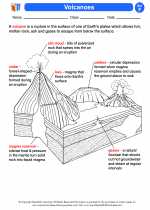 Volcanoes Worksheet/Answer key
 Introduction to earth science Worksheet/Answer key
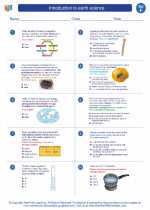 Introduction to earth science Worksheet/Answer key
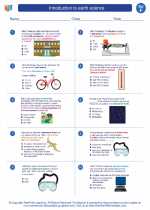 Introduction to earth science Vocabulary/Answer key
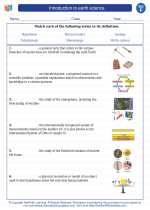 Introduction to earth science Vocabulary/Answer key
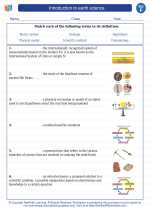 Introduction to earth science
Study GuideActivity LessonWorksheet/Answer keyWorksheet/Answer keyWorksheet/Answer keyVocabulary/Answer keyVocabulary/Answer keyThe resources above cover the following skills:
EARTH AND SPACE SCIENCE