Instinctive Behavior
Instinctive behavior, also known as innate behavior, is the inherent behavior patterns exhibited by animals, including humans, that are genetically programmed and are not learned through experience or conditioning. These behaviors are essential for the survival and reproduction of the species.
Characteristics of Instinctive Behavior:
- Inherited: Instinctive behaviors are passed down from one generation to the next through the genetic code.
- Unlearned: Animals exhibit instinctive behaviors without the need for prior experience or training.
- Species-specific: Each species has its own set of instinctive behaviors that are characteristic of that species.
- Adaptive: Instinctive behaviors contribute to the survival and reproductive success of the organism in its natural environment.
Examples of Instinctive Behaviors:
Some common examples of instinctive behaviors include:
- Mating rituals: Courtship behaviors, nest building, and mating displays in various animal species.
- Migration: Seasonal movements of animals from one region to another in search of food, breeding grounds, or favorable climate conditions.
- Parental care: Behaviors such as grooming, feeding, and protecting offspring.
- Defense mechanisms: Fight or flight responses, camouflage, and territorial behavior.
Study Guide:
When studying instinctive behavior, it's important to consider the following key points:
- Understand the concept of instinctive behavior and its significance in the animal kingdom.
- Learn about specific examples of instinctive behaviors in different animal species and how they contribute to survival and reproduction.
- Explore the genetic and evolutionary basis of instinctive behaviors and their role in adaptation to the environment.
- Examine the interplay between instinctive behaviors and learned behaviors in animals, including humans.
- Consider the ethical implications of studying and manipulating instinctive behaviors in the context of animal welfare and conservation efforts.
By understanding instinctive behavior, we gain valuable insights into the complex and fascinating world of animal behavior and the intricate mechanisms that drive survival and reproduction in the natural world.
.◂Science Worksheets and Study Guides Eighth Grade. Organic compounds
Study Guide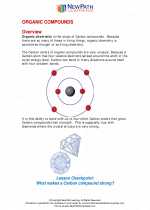 Organic compounds
  Worksheet/Answer key
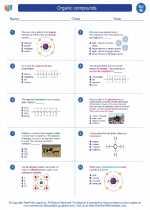 Organic compounds Worksheet/Answer key
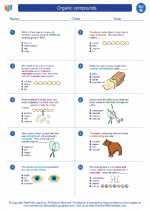 Organic compounds Worksheet/Answer key
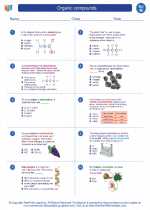 Organic compounds Vocabulary/Answer key
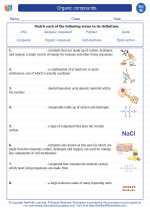 Organic compounds Vocabulary/Answer key
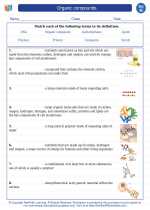 Organic compounds
Worksheet/Answer keyWorksheet/Answer keyWorksheet/Answer keyVocabulary/Answer keyVocabulary/Answer keyThe resources above cover the following skills:
Physics: Students will use scientific skills and processes to explain the interactions of matter and energy and the energy transformations that occur.
Thermodynamics: Identify and explain that heat energy is a product of the conversion of one form of energy to another.
Identify and describe the various forms of energy that are transformed in order for systems (living and non-living) to operate: Chemical - Flashlight-Light; Mechanical - Pulleys-Motion; Solar/Radiant - Solar calculator; Chemical - Plant cells.