Monarchy
A monarchy is a form of government where a single person, known as a monarch, holds supreme authority and power over the state. The position of the monarch is usually hereditary, meaning it is passed down within the same family from one generation to the next.
Types of Monarchy
- Absolute Monarchy: In an absolute monarchy, the monarch has complete and unlimited power over the government and the people.
- Constitutional Monarchy: In a constitutional monarchy, the powers of the monarch are limited by a constitution, and there is usually a parliamentary system in place to share governance.
- Elective Monarchy: In an elective monarchy, the monarch is elected by a specific group or council, rather than inheriting the position.
Roles and Responsibilities of a Monarch
The roles and responsibilities of a monarch can vary depending on the type of monarchy, but they often include:
- Head of state
- Symbolic representation of the country
- Commander-in-chief of the military
- Appointment of government officials
- Presiding over ceremonial and state events
Study Guide
- What is a monarchy?
- What are the different types of monarchy?
- What are the roles and responsibilities of a monarch?
- Compare and contrast absolute monarchy and constitutional monarchy.
- Discuss the advantages and disadvantages of a monarchy as a form of government.
Studying the topic of monarchy will help you understand the different forms of government and how power is structured and exercised in a monarchical system.
.◂Social Studies Worksheets and Study Guides Fifth Grade. States and Capitals
Study Guide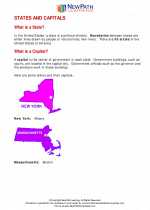 States and Capitals
  Worksheet/Answer key
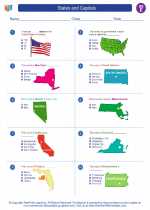 States and Capitals Worksheet/Answer key
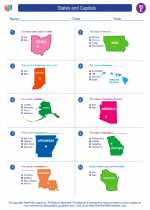 States and Capitals Worksheet/Answer key
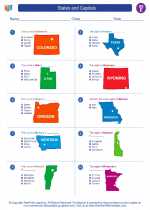 States and Capitals
Worksheet/Answer keyWorksheet/Answer keyWorksheet/Answer keyThe resources above cover the following skills:
Geography: A student should be able to utilize, analyze, and explain information about the human and physical features of places and regions. A student who meets the content standard should:
Understand that a region is a distinct area defined by one or more cultural or physical features.