Helping Verbs
Helping verbs, also known as auxiliary verbs, are used in combination with main verbs to express shades of time and mood. They "help" the main verb by adding meaning to the sentence. Common helping verbs include is, am, are, was, were, have, has, had, do, does, did, can, could, may, might, must, shall, will, and should.
Examples of Helping Verbs
- She is eating her lunch.
- We have completed our homework.
- He will come to the party.
Study Guide
When identifying helping verbs, look for words that come before the main verb in a sentence. Consider the following questions:
- Does the word help the main verb express time or mood?
- Does the word change form to match the subject?
- Can the word stand alone as the main verb in a sentence?
Practice identifying helping verbs in sentences and consider their role in expressing time and mood.
[Helping Verbs] Related Worksheets and Study Guides:
.◂English Language Arts Worksheets and Study Guides Sixth Grade. Grammar/Spelling
Study Guide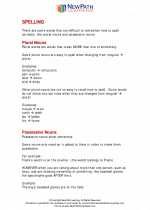 Grammar/Spelling
  Worksheet/Answer key
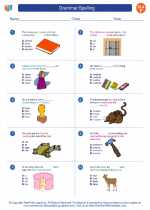 Grammar/Spelling Worksheet/Answer key
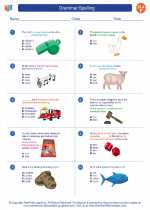 Grammar/Spelling Worksheet/Answer key
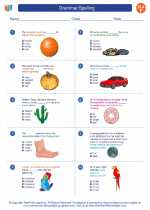 Grammar/Spelling Worksheet/Answer key
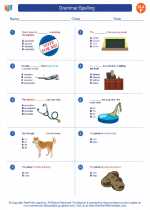 Grammar/Spelling Worksheet/Answer key
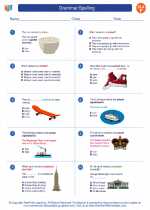 Grammar/Spelling Worksheet/Answer key
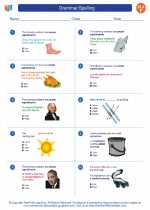 Grammar/Spelling Worksheet/Answer key
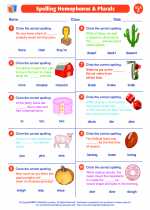 Spelling Homophones & Plurals
Worksheet/Answer keyWorksheet/Answer keyWorksheet/Answer keyWorksheet/Answer keyWorksheet/Answer keyWorksheet/Answer keyWorksheet/Answer keyThe resources above cover the following skills:
Vocabulary - Students will expand their working vocabularies to effectively communicate and understand texts.
Reading - Students will expand academic, domain-appropriate, grade-level vocabularies through reading, word study, and class discussion.
Students will infer the relationships among words with multiple meanings, including synonyms, antonyms, analogies, and more complex homographs and homonyms.