Adverbs
An adverb is a word that modifies or describes a verb, adjective, or another adverb. Adverbs often answer the questions "how," "when," "where," "why," or "to what extent." They can provide information about the manner, time, place, frequency, and degree of an action or quality.
Types of Adverbs
- Adverbs of manner: These adverbs describe how an action is performed. For example: She sings beautifully.
- Adverbs of time: These adverbs describe when an action takes place. For example: They arrived early.
- Adverbs of place: These adverbs describe where an action takes place. For example: The cat jumped up.
- Adverbs of frequency: These adverbs describe how often an action takes place. For example: He always arrives late.
- Adverbs of degree: These adverbs describe the intensity or degree of an action or quality. For example: She is very intelligent.
Study Guide
Here are a few tips for understanding and using adverbs:
- Identify the verb, adjective, or adverb you want to modify.
- Ask yourself what kind of information you want to add (manner, time, place, frequency, or degree).
- Choose the appropriate adverb that fits the context and adds the necessary information.
- Remember that some adverbs have irregular forms, such as "well" instead of "good" and "fast" instead of "fastly."
Practice using adverbs in sentences to become more familiar with their usage in different contexts. Pay attention to the effect they have on the meaning and tone of the sentence.
Remember that adverbs can often be moved around in a sentence without changing the meaning, but their placement can affect the emphasis or focus of the information they provide.
Understanding adverbs and how they function in a sentence will help you communicate more effectively and express nuances in your writing and speech.
[Adverbs] Related Worksheets and Study Guides:
.◂English Language Arts Worksheets and Study Guides Sixth Grade. Parts of Speech
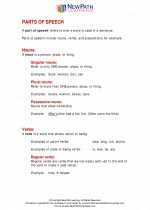
 Worksheet/Answer key
 Worksheet/Answer key
 Worksheet/Answer key
 Worksheet/Answer key
 Worksheet/Answer key
 Worksheet/Answer key