Adverbs of Frequency
Adverbs of frequency are words that indicate how often an action is performed. These adverbs help to provide more information about the frequency of an action or event.
Types of Adverbs of Frequency
- Always: This adverb indicates that the action is performed 100% of the time.
- Usually: It suggests that the action is performed most of the time, but not always.
- Sometimes: This adverb indicates that the action is performed occasionally or at certain times.
- Often: It suggests a frequent occurrence of the action, but not as much as "always" or "usually".
- Rarely: This adverb indicates that the action happens infrequently.
- Never: It suggests that the action does not happen at all.
Placement in a Sentence
Adverbs of frequency are commonly placed before the main verb in a sentence, except when the main verb is "to be". When the main verb is "to be", the adverb of frequency comes after "to be".
Examples
Here are some examples of adverbs of frequency used in sentences:
- I always brush my teeth before going to bed.
- She usually takes the bus to work.
- They sometimes go to the movies on weekends.
- He often visits his grandparents.
- We rarely eat fast food.
- I never drink coffee in the evening.
Study Guide
Here are some tips for using adverbs of frequency effectively:
- Identify the adverb of frequency in a sentence and determine the frequency it represents.
- Practice using adverbs of frequency in sentences to express different levels of frequency.
- Ensure the correct placement of the adverb of frequency in relation to the main verb in a sentence.
- Use adverbs of frequency to describe daily routines, habits, and recurring actions.
Understanding adverbs of frequency is important for creating clear and precise communication about the frequency of actions or events in English.
[Adverbs Of Frequency] Related Worksheets and Study Guides:
.◂English Language Arts Worksheets and Study Guides Sixth Grade. Parts of Speech
Study Guide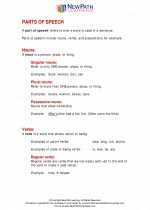 Parts of Speech
  Worksheet/Answer key
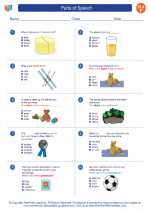 Parts of Speech Worksheet/Answer key
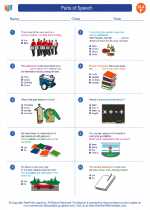 Parts of Speech Worksheet/Answer key
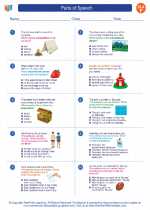 Parts of Speech Worksheet/Answer key
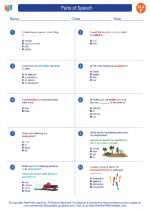 Parts of Speech Worksheet/Answer key
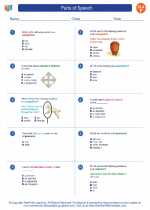 Parts of Speech Worksheet/Answer key
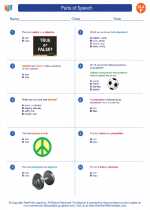 Parts of Speech
Worksheet/Answer keyWorksheet/Answer keyWorksheet/Answer keyWorksheet/Answer keyWorksheet/Answer keyWorksheet/Answer keyThe resources above cover the following skills:
Language Standards
Conventions of Standard English
Demonstrate command of the conventions of Standard English grammar and usage when writing or speaking. [L.6.1]
Demonstrate knowledge of subject-verb agreement when interrupted by a prepositional phrase, with inverted word order, and with indefinite pronouns as subjects.