Fractions
A fraction represents a part of a whole or a part of a group. It consists of two numbers separated by a line or slash. The number above the line is called the numerator, and the number below the line is called the denominator.
Types of Fractions
- Proper Fraction: A fraction where the numerator is less than the denominator, e.g., 3/4.
- Improper Fraction: A fraction where the numerator is greater than or equal to the denominator, e.g., 5/3.
- Mixed Number: A whole number combined with a fraction, e.g., 2 1/3.
Equivalent Fractions
Equivalent fractions are different fractions that represent the same part of a whole. To find equivalent fractions, multiply or divide both the numerator and denominator by the same number.
Adding and Subtracting Fractions
When adding or subtracting fractions, the denominators must be the same. If they are not the same, find a common denominator and then perform the operation on the numerators. Remember to simplify the result if necessary.
Multiplying and Dividing Fractions
To multiply fractions, multiply the numerators together to get the new numerator, and multiply the denominators together to get the new denominator. To divide fractions, multiply the first fraction by the reciprocal of the second fraction.
Study Guide
Here are some steps to help you understand and work with fractions:
- Understand the concept of a fraction as a part of a whole.
- Learn to identify the numerator and denominator of a fraction.
- Practice converting between improper fractions and mixed numbers.
- Explore equivalent fractions and how to find them.
- Practice adding, subtracting, multiplying, and dividing fractions.
Remember, practice is key to mastering fractions. Try solving different fraction problems and use visual aids like fraction bars or circles to help you visualize the concepts.
[Fraction] Related Worksheets and Study Guides:
.◂Math Worksheets and Study Guides Kindergarten. Comparing, and ordering
 Coloring Worksheet
 Coloring Worksheet
 Worksheet/Answer key
 Worksheet/Answer key
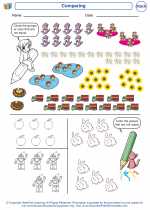 Worksheet/Answer key
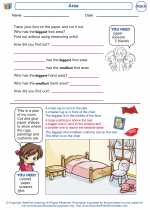 Worksheet/Answer key
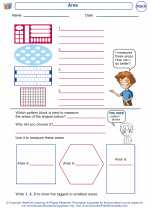 Worksheet/Answer key
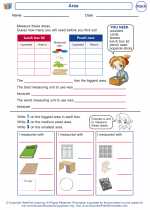 Worksheet/Answer key